British philosopher, Durham, contemporary
Philip Goff
Physics tells us what matter does, never what it is. The one thing we know from the inside, consciousness, may be what fills that gap. If so, consciousness is not a late arrival in a dead universe, but a feature of matter everywhere.
The view
Goff teaches at Durham University and is the best-known defender of panpsychism writing today, in academic work such as Consciousness and Fundamental Reality (2017) and in the popular Galileo's Error (2019). Panpsychism is the view that consciousness is a fundamental and ubiquitous feature of the physical world. It does not mean that rocks think or that electrons have feelings like ours. It means that the basic constituents of matter have some extremely simple form of experience, and that the rich consciousness of humans and animals is somehow built from it.
The view he defends is a form of Russellian monism, after Bertrand Russell, and also drawing on Arthur Eddington. Physics, they observed, describes matter purely by its structure and behaviour: mass is defined by how things resist acceleration and attract one another, charge by how particles repel and attract, and so on. It says nothing about the intrinsic nature that does the behaving. Meanwhile, we know one intrinsic nature directly: our own experience. The simplest hypothesis, Goff argues, is that this is what matter is, intrinsically, all the way down.
The argument
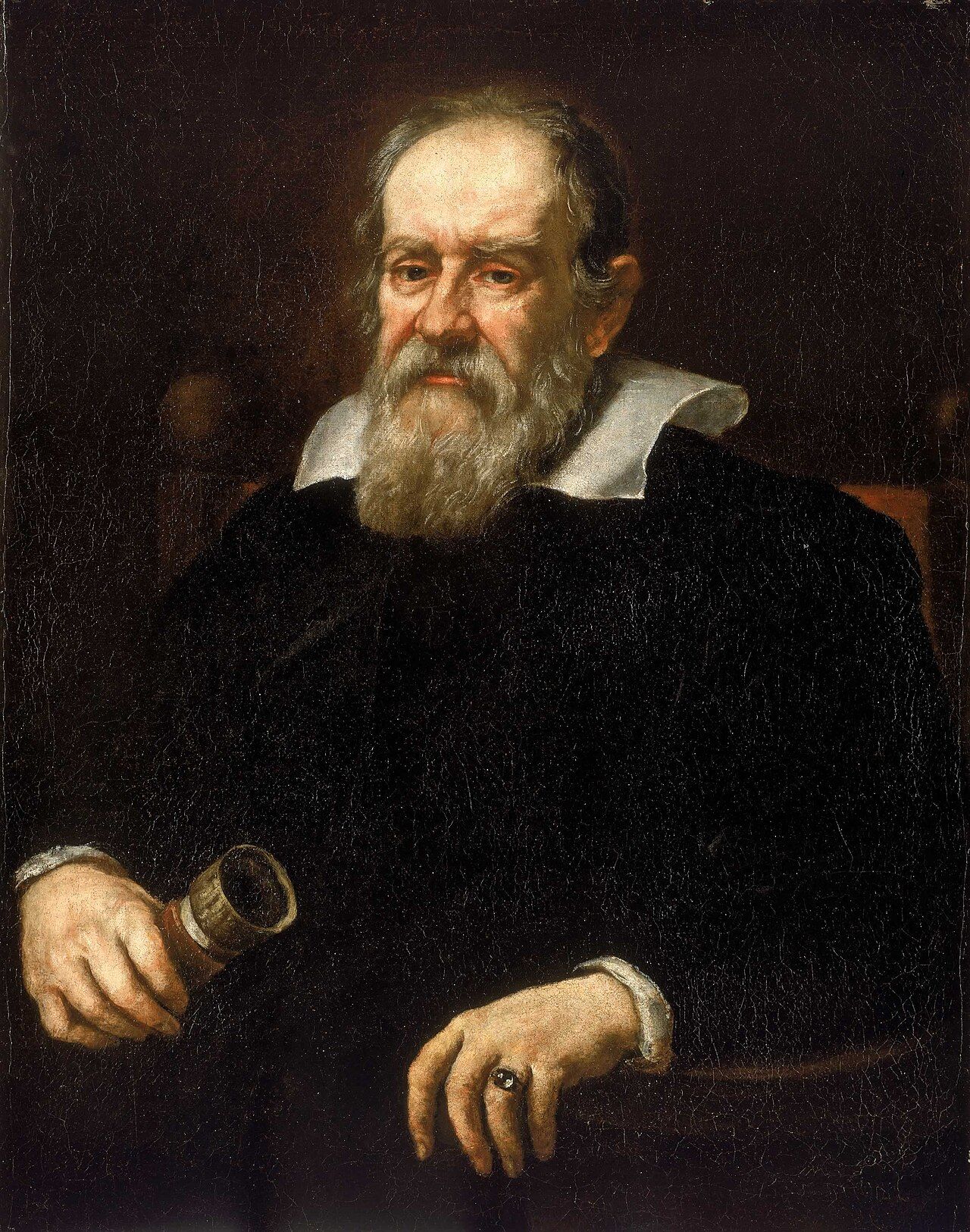
The historical argument goes back to Galileo. In The Assayer (1623) he proposed that colours, tastes and smells are not in the objects at all. Our translation:
If the living creature were taken away, all these qualities would be removed and annihilated. Galileo, The Assayer (1623)
By putting the qualities in the soul and describing matter purely mathematically, Galileo made physics possible. But he did so by setting consciousness aside, so physics was never designed to explain it, and we should not be surprised that it can't. To fix the error, Goff argues, we must bring consciousness back into our picture of matter.
Panpsychism faces its own hard problem, which William James saw in 1890, long before the modern revival:
Take a sentence of a dozen words, and take twelve men and tell to each one word. William James, The Principles of Psychology (1890)
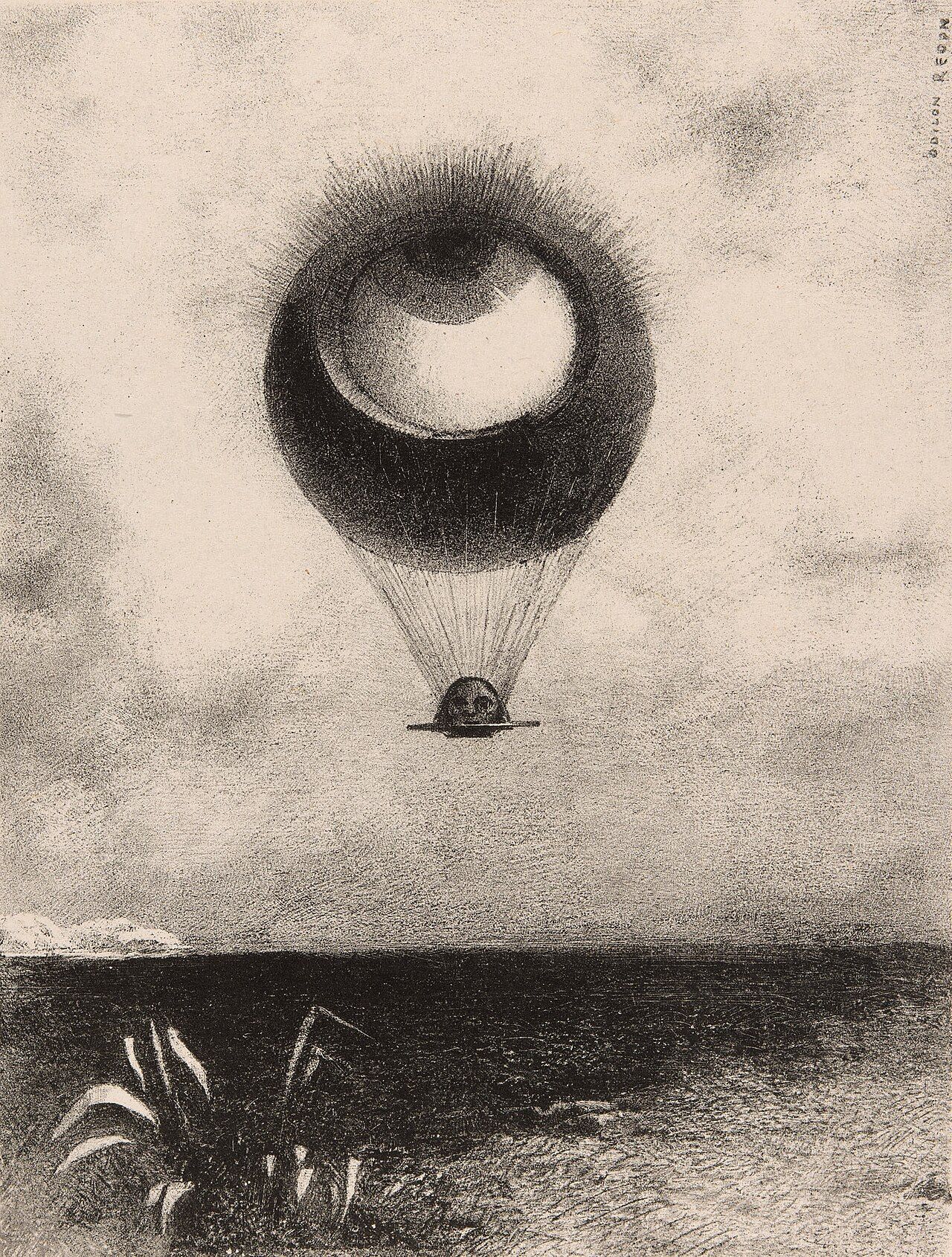
However hard each man thinks of his word, James went on, nowhere will there be a consciousness of the whole sentence. How do billions of tiny subjects add up to one big one, a single unified you? This is the combination problem, and Goff accepts that it is the view's greatest challenge. Try combining them below.
Where he meets Dennett
On very little, which is why Goff stands at the far end of the map. But there is one point of agreement. Both reject the middle ground that most philosophers occupy, in which consciousness is real and special but will somehow be explained by neuroscience anyway. Both think that position is unstable. Either there is something about consciousness that no structural, functional story can capture, in which case we need a radically different picture of matter, or there is not, in which case the "something extra" is an illusion. Some on both sides have put the choice in exactly these terms: panpsychism or illusionism.
Where they part
On everything else. For Goff, consciousness is the one thing we know with certainty, and any theory that denies it refutes itself. For Dennett, that certainty is the conjuror's best trick. Goff starts from the datum and rebuilds physics around it. Dennett starts from the physics and asks how the datum came to seem undeniable. Dennett regarded panpsychism as the clearest case of the "real magic" his 2016 essay warns against: a hypothesis adopted because the trick seems inexplicable, without first exhausting the mundane possibilities. Goff replies that the mundane possibilities have had four hundred years, and have made no progress on the problem Galileo set aside.
| Goff | Dennett | |
|---|---|---|
| What is the mind? | A complex form of the consciousness that is the intrinsic nature of matter. | What the brain does: a pattern of functions. |
| Is phenomenal consciousness real? | Yes. It is the one thing we know for certain, and it is everywhere. | No, not as philosophers define it. It is an illusion produced by the brain. |
| Could a machine have a mind? | Its particles have experience; whether they combine into a subject is uncertain. | Yes, in principle, if it does what we do. |
| Is there a hard problem? | Yes, for physicalism. Panpsychism swaps it for the combination problem. | No. There is the Hard Question: and then what happens? |
Further reading
- Philip Goff, Galileo's Error: Foundations for a New Science of Consciousness (Rider, 2019).
- Philip Goff, Consciousness and Fundamental Reality (Oxford, 2017).
- Galen Strawson et al., Consciousness and Its Place in Nature: Does Physicalism Entail Panpsychism?, ed. Anthony Freeman (Imprint Academic, 2006).
- Panpsychism, Stanford Encyclopedia of Philosophy.