Boston 1942 – Portland, Maine 2024
Daniel Dennett
The mind seems to be an inner theatre where experience is put on for an audience of one. Dennett spent fifty years arguing that there is no theatre and no audience, only the brain's many processes, and a powerful illusion about how they seem.
Dennett taught at Tufts University for most of his career and wrote more than twenty books, from Content and Consciousness (1969) to his memoir I've Been Thinking (2023). The best known, Consciousness Explained (1991), gave his theory its full form. This page follows a later and much shorter piece, "Illusionism as the Obvious Default Theory of Consciousness" (2016). He wrote it in reply to Keith Frankish, whose survey of illusionism it praises as superb. In a few pages it sets out the strategy behind everything else he wrote about the mind. The essay is in copyright, so what follows is our summary in our own words.
1. Stage magic
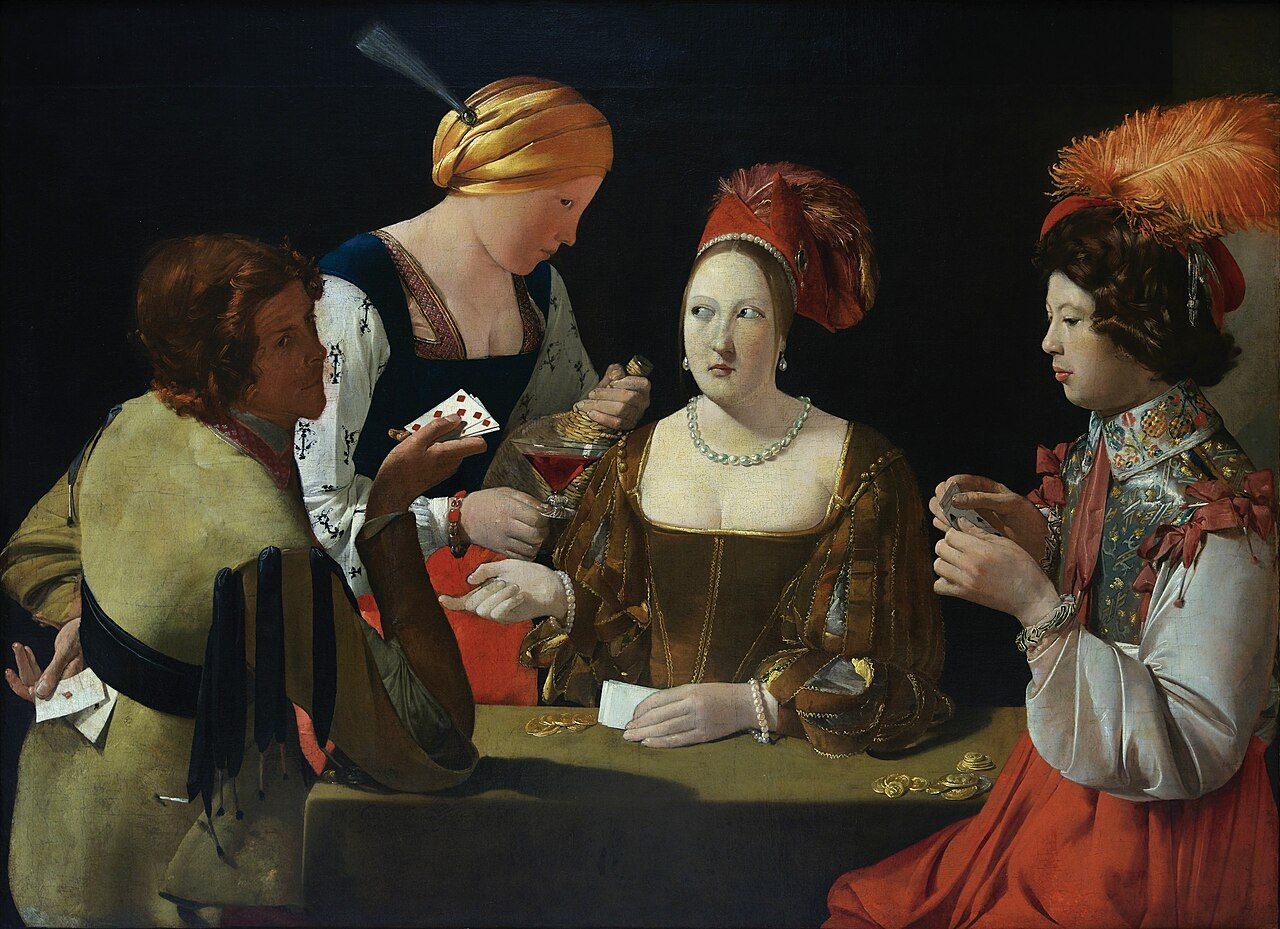
Dennett starts from an everyday word. An illusionist is a stage magician, an expert in sleight of hand. Philosophers who call consciousness an illusion should be illusionists in that sense too, he says. Their job is to work out how the trick is done.
Think about how we treat a conjuror's act. When a coin vanishes or a card turns up in a sealed envelope, nobody today thinks of sorcery, ghosts or new laws of physics. We assume the effect comes from ordinary causes put together in ways we cannot imagine: a palmed coin, a confederate, a magnet, a duplicate card. That assumption can be overturned in principle, but it is where any sensible enquiry begins. Lee Siegel, writing about Indian street magic, noticed the paradox in how we talk. "Real magic" means the kind that cannot be done. The magic that can actually be done is not real magic.
The method is often far more laborious than anyone guesses. The magician Jamy Ian Swiss made the point that audiences never imagine anyone would work so hard to fool them, and that this failure of imagination is itself one of the secrets. The lesson for philosophy, Dennett says, is sharp. Nobody should take seriously someone who watches a trick and declares that no sequence of ordinary physical events could possibly produce it. Yet that is exactly how many philosophers talk about consciousness.
The figure is the cups and balls, the oldest trick in the book and the one Bosch painted. From the audience's seat the ball seems to travel through solid cups. From behind the table, with the other view switched on, the method is almost boring: a second ball and a practised hand. Illusionism, Dennett says, is the claim that consciousness works like the first view and can be explained from the second. One sentence of his abstract states the whole method: "We should explore the mundane possibilities thoroughly before investing in any magical hypotheses."
2. The datum that isn't
David Chalmers calls phenomenal consciousness a datum: a fact we start from, which any theory must accept rather than explain away. Dennett asks us to try the same claim on a stage illusion. Imagine insisting that the lady sawn in half is a datum, or that we are directly acquainted with her being sawn in half. You may well feel acquainted with it, but that is a fact about your psychology. It is a strong intuition, not a piece of evidence, and you could be wrong. Until the alternatives have been explored, the intuition should wait in the queue with everything else.
John Searle put the opposite view in a famous line: where consciousness is concerned, the appearance is the reality. Dennett's answer is "maybe, and maybe not". It cannot be laid down as a first principle that the brain is unable to create an illusion of appearance itself. That is something to be found out by studying brains.
Behind this is a complaint about philosophical method. Many "theories" in philosophy, Dennett says, are really definitions defended: ways of sorting phenomena into categories, driven by shared intuitions, that never predict anything new. Such theories are always catching up with science. They cannot lead it, because whenever a hypothesis is counter-intuitive they count that against it. Illusionism does the opposite. It deliberately gives up a set of comfortable intuitions, and asks to be judged on whether it is rationally compelling rather than on whether it feels right. In Dennett's view that makes it the default: the conservative hypothesis, to be dropped only if it fails to account for the facts.
3. The Cartesian Theatre
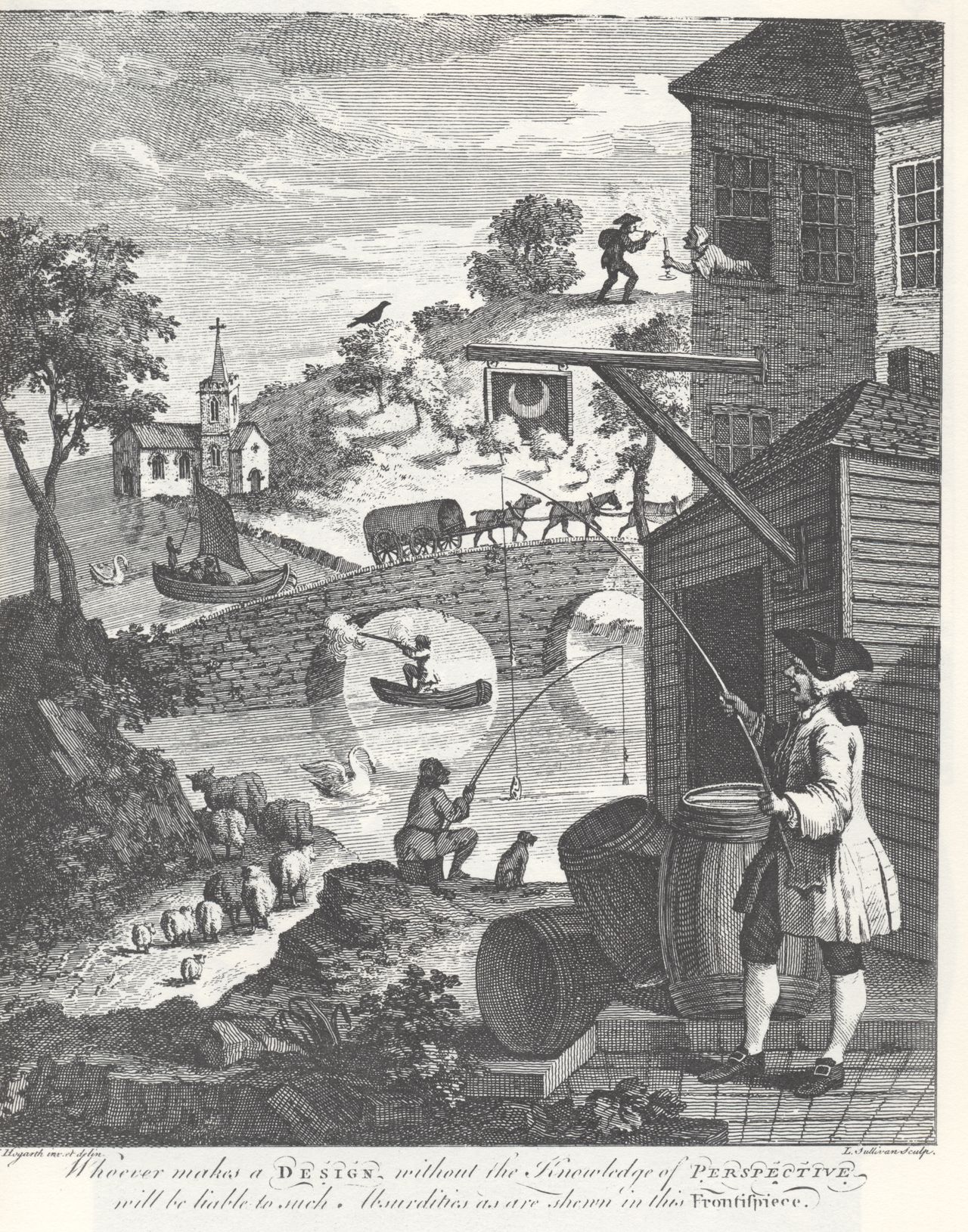
Where does the show of consciousness take place? René Descartes thought the soul met the body in the pineal gland, a small structure deep in the brain, where images from the eyes converge to be viewed. Few people now believe in Descartes' soul, but Dennett argued that most theorists still picture a version of his meeting point. He called it the Cartesian Theatre: a place in the brain where everything "comes together" and is presented to consciousness, like a film to an audience.
The trouble is the audience. If the brain has a screen, someone has to watch it, and that watcher would need a mind of its own, with its own screen and its own watcher, and so on without end. Philosophers call this the homunculus problem, after the little man in the head. The usual way out is to break the watcher into smaller, stupider parts until each one is simple enough to be a mechanism. Dennett accepted that move, and said the theatre has to go with the audience. There is no place in the brain where it all comes together, and no moment when a perception "enters consciousness".
4. Multiple drafts
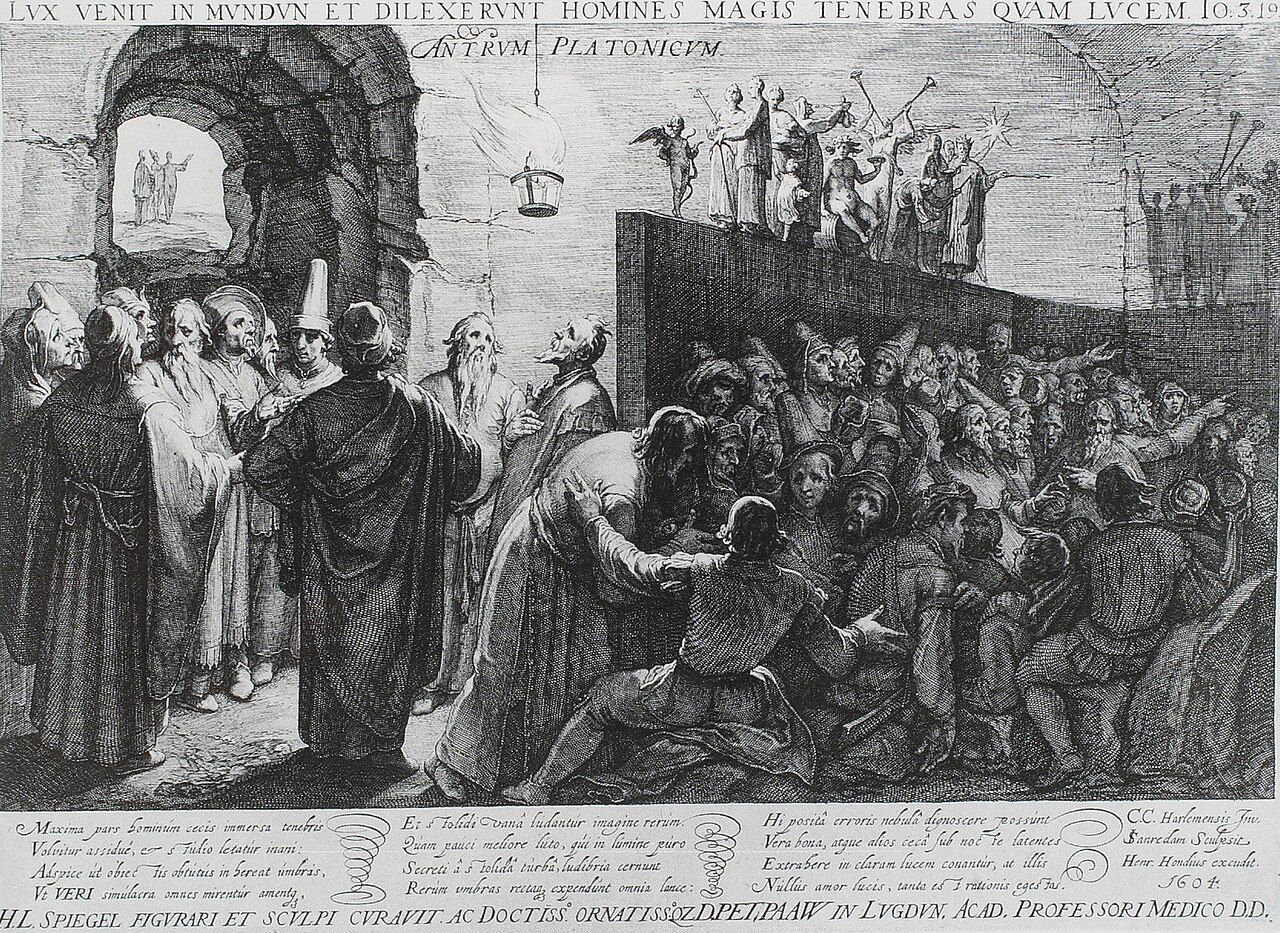
In place of the theatre Dennett offered the multiple drafts model. At any moment the brain is producing many partial interpretations of what is happening, in parallel and in different places. Each is edited, revised, merged or dropped as new information comes in. None of them is the final, official version that consciousness gets to see. What we call being conscious of something is a matter of which drafts win influence over the rest of the brain: over speech, memory, planning and action. Later Dennett described this as "fame in the brain". A content is conscious when it becomes famous enough among the brain's competing processes.
One consequence surprised many readers. If no draft is privileged, there can be no fact about exactly when something became conscious, apart from what happens when the brain is probed. Ask a question and you fix one draft as the answer. Ask a moment later and you may fix a different one. The next section shows why this matters.
5. Colour phi
In 1976 Paul Kolers and Michael von Grünau reported an experiment that Dennett made famous. Flash a red dot, then, after a short gap, a green dot a little way off. Observers do not see two dots. They see one dot moving, and changing from red to green halfway across.
Try it below, and drag the slider to change the gap. With a long gap you see two separate flashes. With a short one, the motion appears.
The puzzle is the colour change in the middle. The switch to green seems to happen before the green dot has appeared, yet you could not have known it would be green until you saw it. Two stories suggest themselves, and Dennett named them with a historian's grim joke. On the Orwellian story you consciously saw two dots, and your memory was rewritten a moment later, as the Ministry of Truth rewrote the records. On the Stalinesque story the brain held the red dot back in an editing room and put on a show trial for consciousness, complete with invented motion, once the green had arrived.
Press each button to see both timelines. They agree on everything that can be measured: what reaches the eyes, what the subject reports, and what the subject would say under any questioning. Dennett and the neuroscientist Marcel Kinsbourne (1992) argued that the difference between them is not just unknown but unreal. It only looks like a real question if you assume a finish line in the brain, a moment when contents cross into the theatre. Drop the theatre and the question has no answer to find.
6. And then what happens?
Dennett thought the most important question in consciousness science was not Chalmers's "hard problem" but what he called the Hard Question: and then what happens? Suppose a theory says that a representation of red appears in some brain area. That is only half a theory until it says who or what uses the representation, and what they do with it. Does it guide the hand, trigger a memory, shape what you say, move you to tears?
Some representations, he pointed out, are uncontroversially unconscious. The brain keeps track of your blood sugar and adjusts your digestion without ever bothering the cortex. Such representations work in us without being for us. Much of cognitive science deals in exactly this kind of unconscious, content-carrying state. The illusionist's task is to explain how some of these states, used in particular ways, give rise to our conviction that we are having experiences.
Frankish's survey of illusionism raises a list of open questions. Are we aware only of what our sensory states represent, or also of features of the brain states that carry it? Are those states constantly monitored, or just available to monitoring when needed? Dennett expected some of these crisp-sounding choices to blur once the Hard Question is answered in detail. Suppose signals that mean "dog here now" keep arriving at some part of the cortex every twenty milliseconds. Is that part monitoring for dogs, or simply lulled into not asking? The distinction may have no clear answer, as it already has none in many computer programs. Questions phrased in the manifest image, Wilfrid Sellars's name for the world as common sense describes it, may not survive the move to the scientific image.
7. The red stripe
Here is the essay's central example. You can try it yourself first. Stare at the white dot in the middle of the strangely coloured flag below for twenty seconds without moving your eyes, then look at the blank panel that replaces it.
The flag stays still; nothing flashes.
Most people see a red, white and blue flag floating on the blank panel. Now ask where the red stripes are. There are none on the screen, which is plain grey. There are none on your retina, which is simply recovering, cell by cell, from fatigue. And there are none in your brain: no patch of neurons turns red. There is no red stripe anywhere. What there is, Dennett says, is a representation of a red stripe, a state of your visual cortex that causes your heartfelt conviction that you see one.
We understand the early part of that causal chain quite well. Colour vision works by opponent processes, and cells tired by green rebound towards red. What nobody can report from the inside are the last links: the processes that actually produce the conviction and everything that follows from it. That is true of ordinary seeing too. You have no privileged access to how your perception works, only to its results.
The idea is older than Dennett. In 1956 U. T. Place called one mistake the "phenomenological fallacy". It is the mistake of thinking that when you describe how things look, you are describing the properties of objects on an inner cinema screen. Three years later J. J. C. Smart showed how to avoid it. When someone reports a yellowish-orange after-image, Smart suggested, they are in effect saying that something is going on in them like what goes on when they really see an orange patch. A mechanism can detect that two of its states are alike without knowing what the likeness consists in. Dennett's point is that a brain full of such mechanisms could answer most of "and then what happens?" without ever needing a phenomenal colour.
8. No figment
So what is the red stripe you seem to see? Dennett's answer is that it is not the cause of your belief but its intentional object: what the belief is about. Normally these coincide. You believe you are holding a blue mug because a blue mug is causing you to believe it, and the whole point of perception is to bring causes and objects together. Sometimes they come apart. Imagine a gang of hoaxers convincing you, through phone calls and staged visits, that an alien called Zom keeps dropping in. Your beliefs are about Zom, but nothing in the world deserves the name. The causes of your Zom-beliefs are a dozen scattered pranks.
What is Zom made of? Nothing. Intentional objects without matching causes are fictions of a sort. We do not suppose there is a special "fictoplasm" from which Sherlock Holmes and Hamlet are made, and in the same way, Dennett argued, we should not suppose there is a special stuff, which he mockingly called figment, from which phenomenal colours are made. When a red stripe is really out there, its redness is a complicated physical property of the stripe. When it only seems to be there, that same property is represented as present by a team of brain processes. Nothing else is needed.
The tempting mistake runs like this: there seems to be a red stripe out there; there is no red stripe out there; so it must be in here. Add the thought that even ordinary seeing needs an inner red stripe as a go-between, and you have the whole Cartesian Theatre back. The illusionist's advice is to stop at the first step. You could be caused to have all your convictions about colour by representations with no phenomenal properties at all. Stage magicians make a living from provoking beliefs like these: sincere, vivid and false.
9. The intentional stance
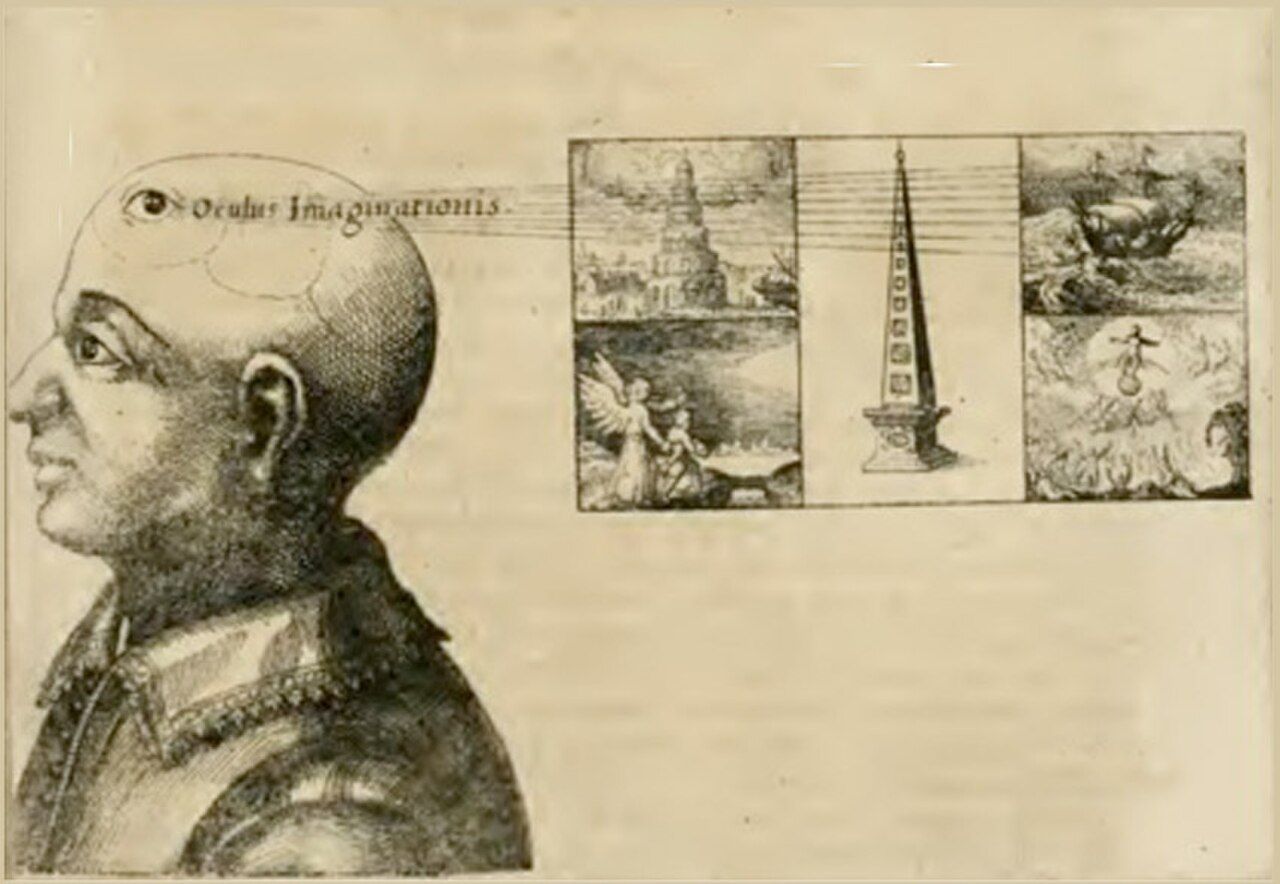
Dennett's account of consciousness grew out of an earlier theory about belief and desire. In The Intentional Stance (1987) he distinguished three ways of predicting what a system will do. The physical stance works from physics and chemistry: it predicts that a dropped stone will fall. The design stance works from what something is built to do: it predicts that an alarm clock will ring at seven, without any knowledge of its circuits. The intentional stance treats the system as a rational agent with beliefs and desires, and predicts that it will do what a rational agent with those beliefs and desires would do.
Something has beliefs, on this view, if the intentional stance reliably predicts its behaviour. That sounds deflationary, but Dennett insisted that the patterns the stance tracks are real, as real as a centre of gravity, even though they are not extra objects inside the head. It is also what makes him a functionalist. What matters about a mind is the pattern of what it does, and the same pattern could in principle run on neurons, silicon or anything else.
10. Taking reports seriously
A common complaint is that Dennett ignores experience. He thought the opposite was true. His method, which he called heterophenomenology, starts by collecting everything subjects say and do about their inner lives, without filtering any of it out. It then treats this material the way an anthropologist treats a people's beliefs about their gods. The beliefs are real data, and they must all be explained. Whether their objects exist is a separate question.
The method is neutral at the start. It does not assume that subjects are right about their experiences, or that they are wrong. It asks what would explain their saying what they say. Sometimes the answer is that things are exactly as they seem. Sometimes, as with the after-image or colour phi, it is that the brain has produced a convincing account of something that is not there. The aim is a complete explanation of how things seem.
11. Quining qualia
Qualia is philosophers' word for the qualities of experience: the redness of red, the painfulness of pain, taken as intrinsic, private and ineffable. In 1988 Dennett published "Quining Qualia". To "quine" a thing, in his joke dictionary named after the philosopher W. V. O. Quine, is to deny resolutely that it exists. The paper used a series of thought experiments to argue that the notion of qualia falls apart under pressure. Two coffee tasters, Chase and Sanborn, both say they no longer enjoy their company's coffee. One says the taste has stayed the same and his liking has changed. The other says his tastes are the same but the coffee now tastes different to him. Dennett argued that nothing, from the inside or the outside, could settle which of them is right. A property no possible evidence could detect is not one we should believe in.
In the 2016 essay he admits that the joke backfired. The playful title made his position look like a desperate dodge, a refusal to admit the obvious, and he says he now repents of it. He never stopped denying qualia as philosophers define them. What he wanted readers to see was that the denial is a sober, conservative hypothesis, not a stunt.
12. Objections
Illusionism has many critics, and several get their own pages here. The commonest objection is that the view refutes itself. An illusion is a false appearance, so to say that consciousness is an illusion seems to admit that something appears, and appearing is just what consciousness is. Galen Strawson has called the denial of experience the silliest claim ever made. David Chalmers takes illusionism more seriously and turns it into a research question, the "meta-problem": why do we think there is a hard problem? Philip Goff argues that physical science, by design, describes only structure and leaves out the qualities that consciousness reveals.
Dennett's reply, here and elsewhere, is to separate seeming from what it seems to reveal. The brain really does represent things as being a certain way, so in that sense there are appearances. What is illusory is the further idea that these appearances have special phenomenal properties beyond their role in the brain's economy. Everyone agrees there is something to explain. The disagreement is over whether, once the explaining is done, anything will be left over.
His own closest allies developed the view in different directions. Keith Frankish gave illusionism its name and its most careful formulation. Nicholas Humphrey keeps the illusion but argues that it is a magnificent biological adaptation. Michael Graziano offers a specific engineering model of how the brain builds it.
In brief
- Treat consciousness like a stage trick: assume ordinary causes until they are shown to fail.
- Strong intuitions about experience are data about us, not direct evidence about experience.
- There is no Cartesian Theatre, no place or moment where everything comes together for an inner viewer.
- The brain runs multiple drafts in parallel; being conscious is winning influence, or fame, among them.
- Every theory must answer the Hard Question: and then what happens?
- The red stripe you seem to see is the object of a belief, not a thing made of "figment".
Further reading
- Daniel C. Dennett, "Illusionism as the Obvious Default Theory of Consciousness", Journal of Consciousness Studies 23 (2016), reprinted in Keith Frankish (ed.), Illusionism as a Theory of Consciousness (Imprint Academic, 2017).
- Daniel C. Dennett, Consciousness Explained (Little, Brown, 1991): the multiple drafts model in full.
- Daniel C. Dennett, Sweet Dreams: Philosophical Obstacles to a Science of Consciousness (MIT Press, 2005): fame in the brain, and the magic analogy.
- Daniel C. Dennett, From Bacteria to Bach and Back (Allen Lane, 2017): the user illusion as an evolved interface.
- Temporal consciousness, Stanford Encyclopedia of Philosophy, for the colour phi debate.