American cognitive scientist, born 1945
Douglas Hofstadter
An "I" is a strange loop: a pattern in the brain that represents itself, and by doing so seems to come alive. Meaning and selfhood rise out of levels of meaningless activity, as Gödel's sentence about itself rises out of arithmetic.
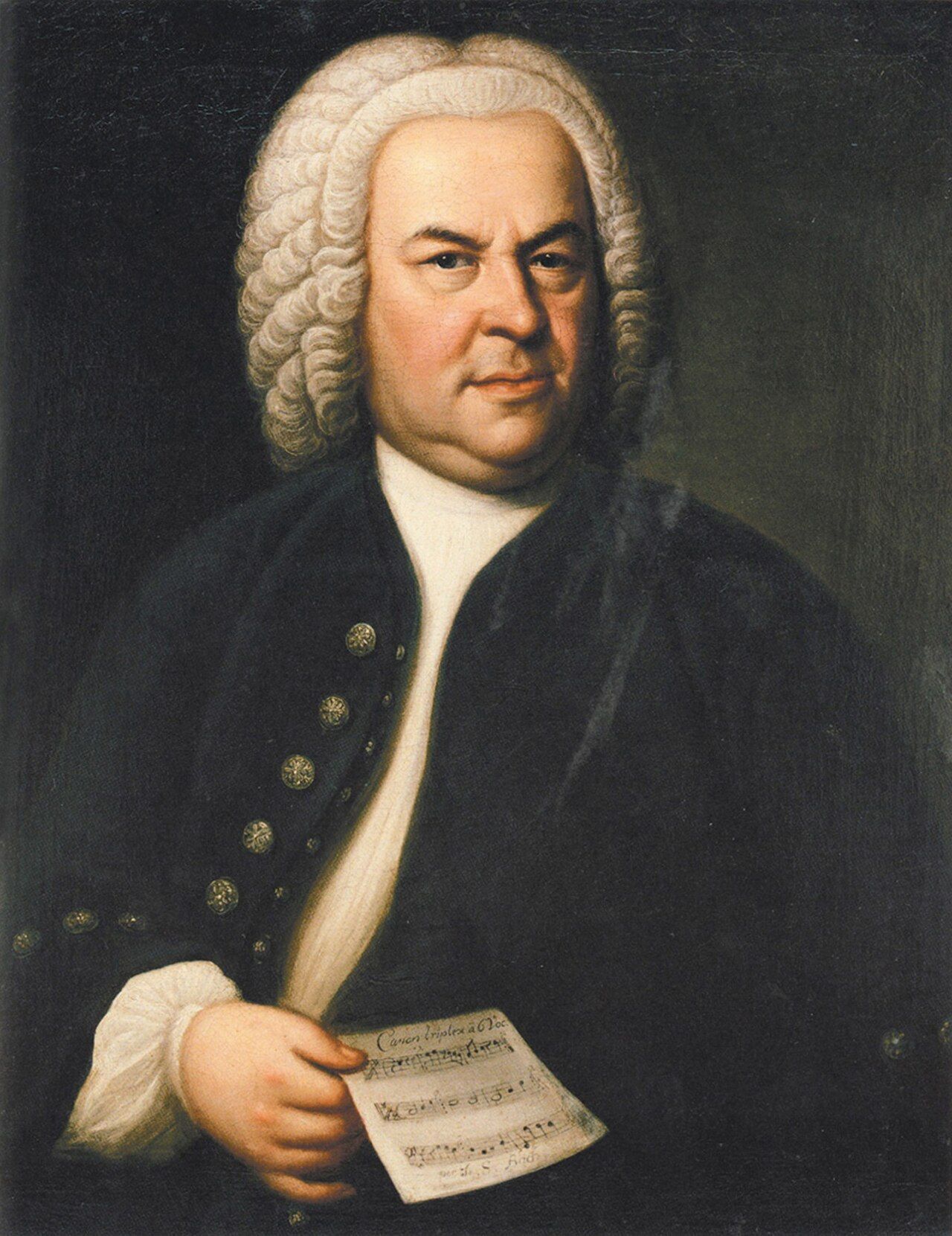
The view
Hofstadter is a cognitive scientist at Indiana University. His first book, Gödel, Escher, Bach: an Eternal Golden Braid (1979), won the Pulitzer Prize and drew a generation of readers into questions about minds and machines. It weaves together Kurt Gödel's incompleteness theorem, M. C. Escher's self-drawing pictures and Bach's endlessly rising canons, alternating chapters with playful dialogues between Achilles and the Tortoise. Its real subject, Hofstadter later said, was the question of what an "I" is. He returned to it more directly in I Am a Strange Loop (2007).
In 1981 he and Daniel Dennett edited The Mind's I, an anthology of stories, essays and thought experiments about the self, each followed by commentary from one or both of them. It remains one of the best introductions to the philosophy of mind, and the friendship and shared outlook behind it lasted for the rest of Dennett's life.
The argument
An "I" is a pattern that, by representing itself, comes to seem real to itself. After Hofstadter, I Am a Strange Loop (2007)
The model is Gödel's proof. Gödel showed how to make statements of arithmetic, which seem to be only about numbers, refer to themselves, by coding statements as numbers. Out of the dry rules of arithmetic came a sentence that, in effect, says "I am not provable". Meaning had emerged at a higher level from symbols that, at the lower level, meant nothing of the kind.
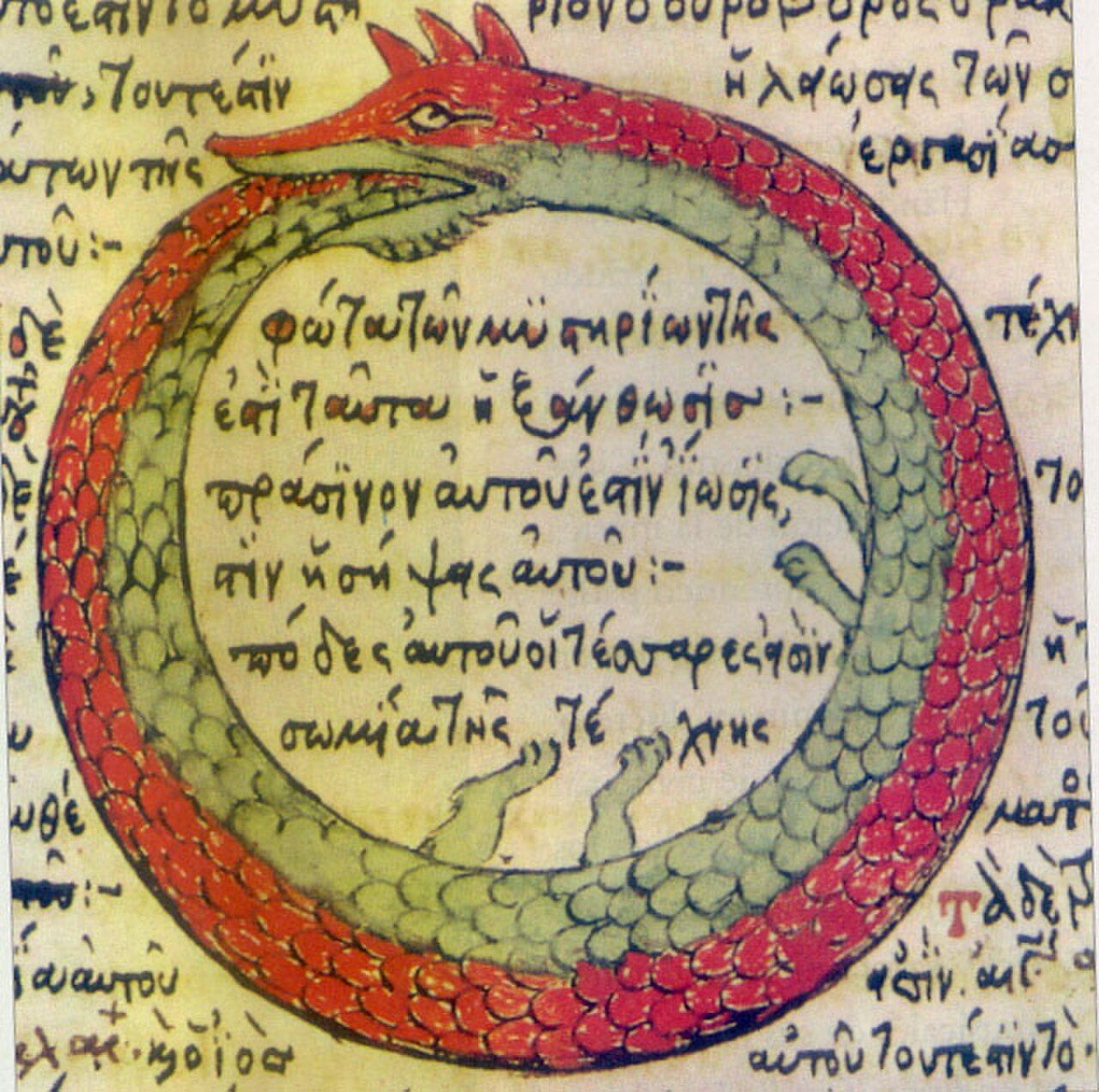
Hofstadter's suggestion is that brains do something similar. Neurons are meaningless at their own level, but the brain builds symbols for things in the world, and eventually a symbol for itself. That self-symbol is caught up in a loop. It perceives, it models its own perceiving, and the model changes what it perceives next. A strange loop is a loop that, by moving through levels, ends up back where it started. The "I" is such a loop, and its sense of being a solid, indivisible thing is how the loop looks from the inside. His favourite image is a video camera pointed at its own screen. Try it below.
Point the camera at the world and the screen shows the world. Point it at its own screen and something new appears: a corridor of screens within screens, often spiralling into a shape that holds steady, as if it had a life of its own. No single screen contains it, and nothing outside the loop is drawing it. Hofstadter thinks the self is like this: a stable pattern sustained by a system's representation of itself.
Where he meets Dennett
Almost everywhere, and on purpose. Both think the mind is a matter of patterns and levels, not of special stuff; both think a machine organised in the right way could have a mind; both treat the self as something constructed rather than given. Dennett's "centre of narrative gravity" and Hofstadter's strange loop are close relatives: an abstraction, not an extra object, yet real and causally important. Both loved thought experiments, and The Mind's I is full of them, including Dennett's own story "Where Am I?", in which his brain is kept in a vat in Houston while his body roams.
Where he parts
The differences are of emphasis. Hofstadter is readier than Dennett to say that the "I" is real, and to dwell on what it means. After the death of his wife, Carol, he came to think that a person's pattern can live on, in a reduced form, in the minds of those who knew them well, since each of us carries a model of the people we love. Dennett agreed with the idea of selves as patterns but was cooler about what follows.
They also came apart over artificial intelligence. Hofstadter long argued that real intelligence depends on analogy-making and fluid concepts, and that most AI missed this. In recent years he has said he finds the speed of progress in AI unsettling, even frightening. Dennett's late worry was more practical: not that machines would think, but that machines passing for people would erode trust.
| Hofstadter | Dennett | |
|---|---|---|
| What is the mind? | Patterns of symbols in the brain, including a strange loop that models itself. | What the brain does: a pattern of functions. |
| Is phenomenal consciousness real? | Real as a high-level pattern; the solid "I" is how the loop looks from inside. | No, not as philosophers define it. It is an illusion produced by the brain. |
| Could a machine have a mind? | Yes, with the right patterns, though most AI has missed analogy and fluid concepts. | Yes, in principle, if it does what we do. |
| Is there a hard problem? | No: consciousness comes with self-reference at the right level. | No. There is the Hard Question: and then what happens? |
Further reading
- Douglas R. Hofstadter, Gödel, Escher, Bach: an Eternal Golden Braid (Basic Books, 1979).
- Douglas R. Hofstadter, I Am a Strange Loop (Basic Books, 2007): the self, directly.
- Douglas R. Hofstadter and Daniel C. Dennett (eds), The Mind's I: Fantasies and Reflections on Self and Soul (Basic Books, 1981).
- Douglas Hofstadter and Emmanuel Sander, Surfaces and Essences: Analogy as the Fuel and Fire of Thinking (Basic Books, 2013).