Belgrade, born 1937
Thomas Nagel
A bat finds its way by echoes, and there is surely something it is like to be a bat. However much we learn about its brain, we seem no closer to knowing what that is. Physical science describes the world from no point of view; experience is a point of view.
The view
Nagel, who taught for decades at New York University, published "What Is It Like to Be a Bat?" in the Philosophical Review in 1974. It is perhaps the most cited paper in the philosophy of mind, and its title phrase became the standard definition of consciousness. An organism has conscious experience, Nagel proposed, if there is something it is like to be that organism: something it is like for the organism.
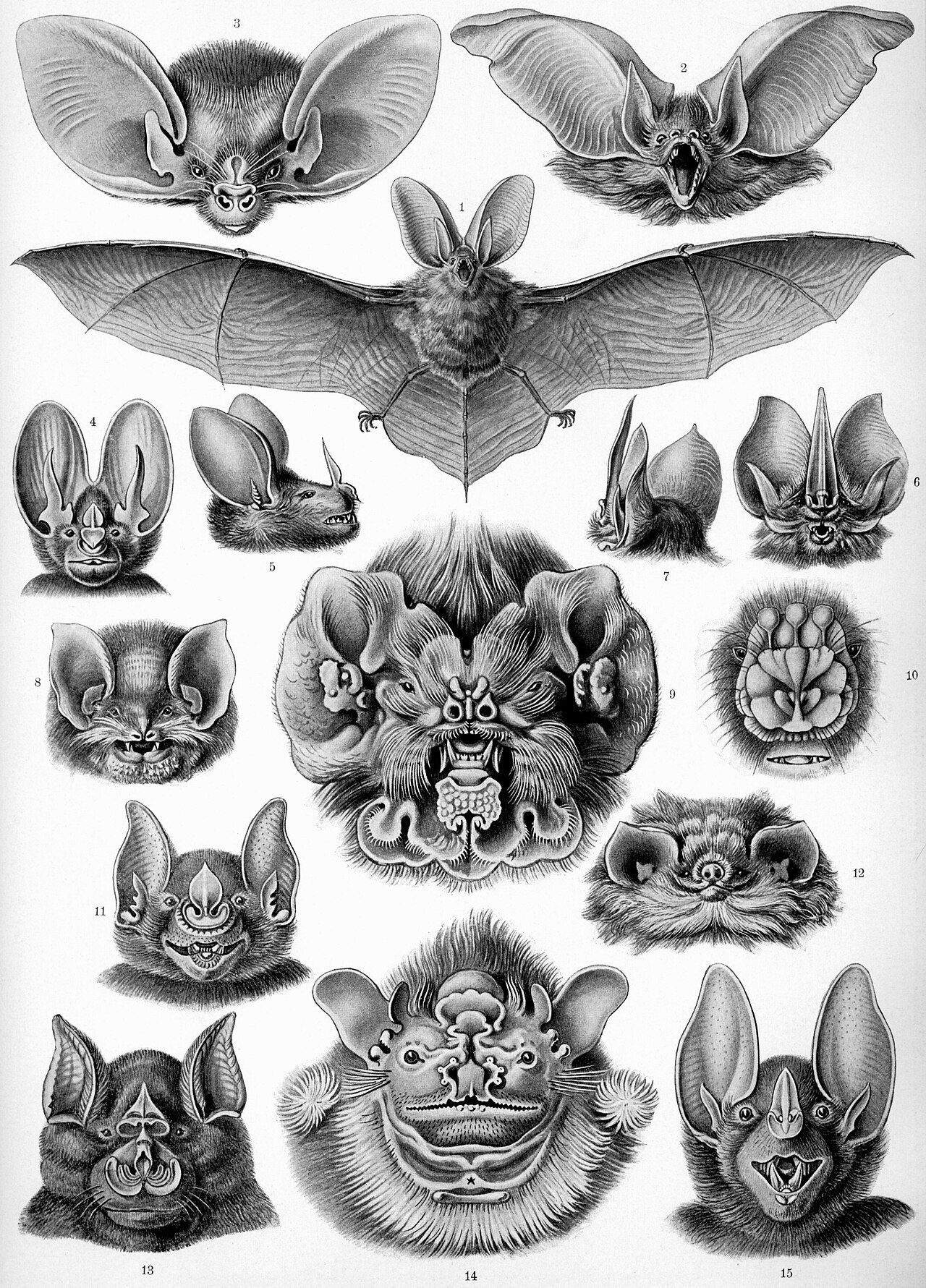
He chose bats because they are mammals, so few people doubt they have experiences, but their main sense is alien to us. A bat sends out high-pitched shrieks and perceives its surroundings from the echoes, judging distance, size, shape, motion and texture. We can describe how this works in detail. What we cannot do, Nagel argued, is imagine what it is like for the bat. We can imagine what it would be like for us to behave like a bat, hanging upside down and eating insects, but not what it is like for a bat to be a bat.
The argument
Every subjective phenomenon is tied to a single point of view, which an objective physical theory abandons. After Nagel, "What Is It Like to Be a Bat?" (1974)
Science makes progress by moving away from particular points of view: from how things look to us towards descriptions that any observer, human, Martian or machine, could share. That works for lightning and heat. But if experience is essentially a point of view, the move to objectivity leaves it behind. So physicalism, Nagel concluded, cannot at present be understood. He did not say it was false. He said we lack the concepts even to see how it could be true. Try the figure: everything on the physics side can be measured.
Where he meets Dennett
On the question, more than the answer. Both agree that any theory of consciousness must explain why there seems to be something it is like to be us, and both take animal minds seriously. Nagel's argument is also honest about its own limits: he does not claim that physicalism is false, only that we cannot yet see how it could be true. Dennett thought that was a fair description of the state of the science, and a challenge to be met.
Where they part
Dennett thought Nagel's conclusion was defeatist. We can learn a great deal about what it is like to be a bat, he argued, by working out what the bat can and cannot discriminate, what it attends to, what it is fooled by and how its world is structured. That is how we learn what it is like to be another person, too. If something remains that no such facts could ever reveal, it is not a fact that makes any difference to anything, including to the bat. "What it is like", on this view, is a pointer to a heap of discoverable facts, not to an inner essence beyond the reach of science.
Nagel's later work moved further from Dennett. Mind and Cosmos (2012) argued that the materialist, neo-Darwinian picture of nature is almost certainly false because it cannot account for consciousness, reason and value. Dennett regarded it as a learned man's argument from incredulity.
| Nagel | Dennett | |
|---|---|---|
| What is the mind? | Something with a subjective point of view that physical description leaves out. | What the brain does: a pattern of functions. |
| Is phenomenal consciousness real? | Yes: there is something it is like to be a conscious creature. | No, not as philosophers define it. It is an illusion produced by the brain. |
| Could a machine have a mind? | Unknown: we cannot even tell what it is like to be a bat. | Yes, in principle, if it does what we do. |
| Is there a hard problem? | Yes. We lack the concepts to see how physicalism could be true. | No. There is the Hard Question: and then what happens? |
Further reading
- Thomas Nagel, "What Is It Like to Be a Bat?", Philosophical Review 83 (1974), reprinted in his Mortal Questions (Cambridge, 1979).
- Thomas Nagel, The View from Nowhere (Oxford, 1986).
- Ed Yong, An Immense World (Bodley Head, 2022): what science can tell us about animal senses, bats included.
- Qualia, Stanford Encyclopedia of Philosophy.