Adelaide, 1956 and 1959
U. T. Place and J. J. C. Smart
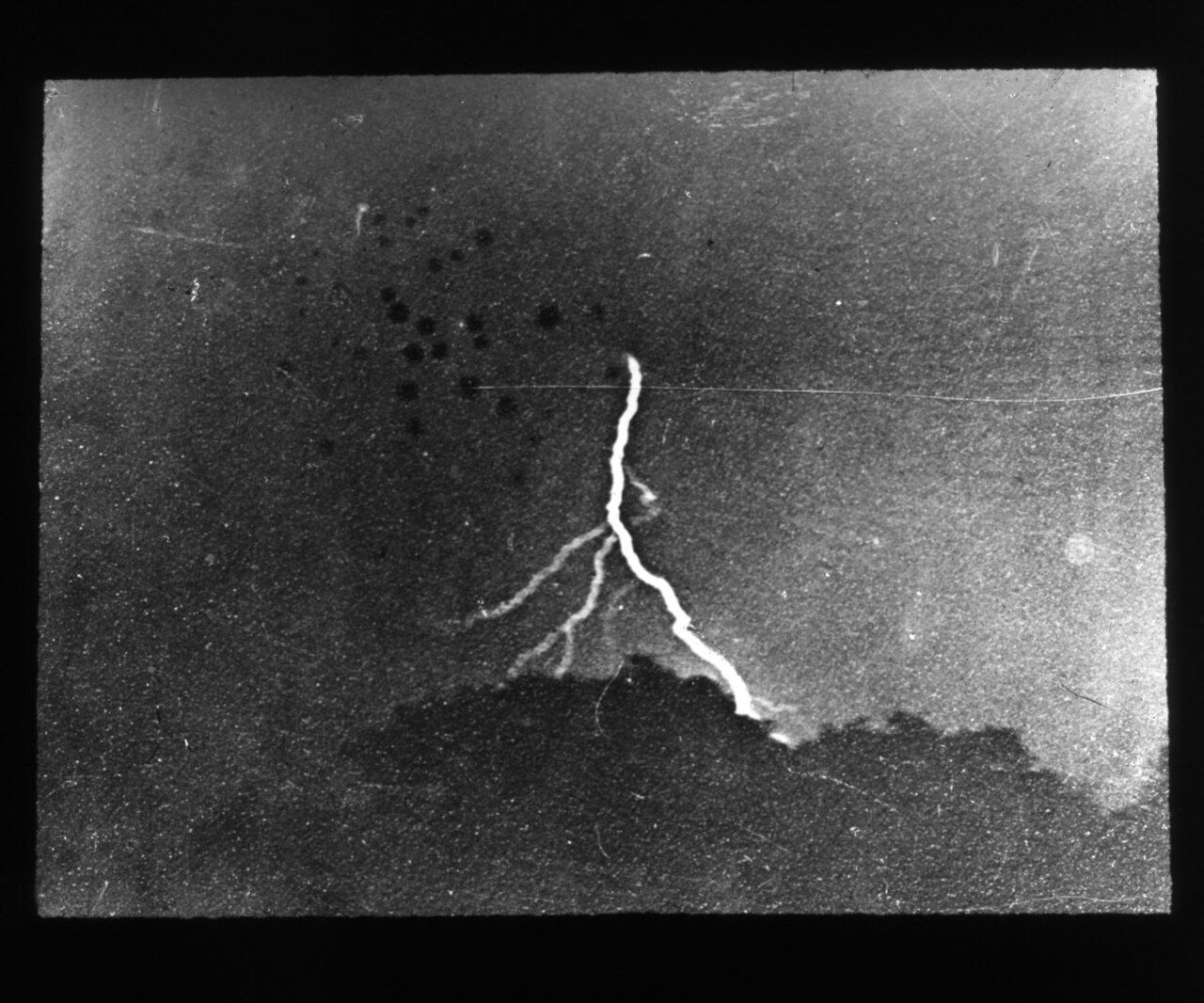
A sensation is a process in the brain, just as lightning is a discharge of electricity. The two descriptions mean different things, but they pick out one and the same event. Nothing is left over.
The view
In the 1950s the University of Adelaide was an unlikely centre of philosophy, and a short-lived one. Ullin Place, an English psychologist and philosopher, taught there in the early 1950s. Jack Smart, born in Cambridge and educated in Glasgow and Oxford, was professor. In 1956 Place published "Is Consciousness a Brain Process?" in the British Journal of Psychology. Smart, at first sceptical, was converted, and his "Sensations and Brain Processes" (1959) in the Philosophical Review made the view famous. Herbert Feigl in America reached similar conclusions at the same time. Together they founded the identity theory, also known as Australian materialism.
The claim is that sensations are identical with brain processes. This is not a claim about the meaning of words: "I have an after-image" does not mean "my visual cortex is in state X", any more than "there's lightning" means "there's an electrical discharge". It is a scientific discovery, or a prediction of one. Different words, discovered to refer to the same thing.
The argument
A sensation is a brain process in the way that lightning is an electrical discharge. After Smart, "Sensations and Brain Processes" (1959)
Smart's main argument was simplicity. Science was explaining everything else in physical terms. It would be bizarre if sensations alone were "nomological danglers", extra items hanging off the physical world with no place in its laws. Ockham's razor favours the identity.
The hardest objection was about properties. Even if the after-image is a brain process, isn't its yellowish-orange colour a property that the brain process lacks? Smart's reply was ingenious. When you report an after-image, you are not describing a yellow thing in the mind. You are saying, in effect, that something is going on in you like what goes on when you see an orange really out there. The report is topic-neutral: it leaves open what the something is. Science can then discover that it is a brain process. The figure shows the two descriptions side by side.
Place supplied a name for the mistake the identity theory avoids. He called it the phenomenological fallacy: supposing that when we describe how things look or feel, we are describing the properties of objects on an inner screen. Dennett, sixty years later, saw in this the first seeds of illusionism.
Where they meet Dennett
Dennett's 2016 essay on illusionism goes back to exactly these papers. Place's phenomenological fallacy is the error Dennett spent his career diagnosing, and Smart's topic-neutral reports show how to avoid it. A mechanism can detect that two of its own states are alike without knowing what the likeness consists in. Fill a brain with such mechanisms, Dennett argued, and you can answer much of "and then what happens?" without ever invoking phenomenal properties.
Where they part
The identity theory identifies types: pain, as such, is some particular kind of brain process. That made it vulnerable to Putnam's objection. An octopus, a Martian or a robot might feel pain with very different hardware, so pain cannot be one kind of brain process. Dennett sided with Putnam: what makes a state a pain is its role, not its material. He was also wary of the identity theory's assumption that there are neat units called "sensations" waiting to be matched with neat units of brain activity. On the multiple drafts model, the brain's contents are too fluid and too distributed for that.
| Place and Smart | Dennett | |
|---|---|---|
| What is the mind? | Brain processes: each kind of sensation is a kind of brain process. | What the brain does: a pattern of functions. |
| Is phenomenal consciousness real? | Sensations are real, and are brain processes; inner screens are a fallacy. | No, not as philosophers define it. It is an illusion produced by the brain. |
| Could a machine have a mind? | Only if it had the same kind of processes as brains. | Yes, in principle, if it does what we do. |
| Is there a hard problem? | No: a scientific identity, like lightning and electricity. | No. There is the Hard Question: and then what happens? |
Further reading
- U. T. Place, "Is Consciousness a Brain Process?", British Journal of Psychology 47 (1956).
- J. J. C. Smart, "Sensations and Brain Processes", Philosophical Review 68 (1959).
- David Papineau, Thinking about Consciousness (Oxford, 2002): a modern defence of the identity theory.
- The mind/brain identity theory, Stanford Encyclopedia of Philosophy.