British philosopher, contemporary
Keith Frankish
Phenomenal consciousness is an illusion: not a delusion we could talk ourselves out of, but a systematic misrepresentation built into the way the brain models itself. The hard problem becomes the illusion problem.

The view
Others had defended versions of the idea, but Frankish gave illusionism its name as a research programme. His 2016 target article, "Illusionism as a Theory of Consciousness", in the Journal of Consciousness Studies, set out the position and drew replies from many philosophers and scientists, Dennett's among them. The exchange was published as a book the following year.
Frankish starts by separating two things that the word "consciousness" runs together. There are the functional facts: the brain detects, discriminates, attends, reports and remembers. Nobody denies these. And there is the extra thing many philosophers believe in: phenomenal consciousness, the private, intrinsic, ineffable quality of experience, the "what-it-is-likeness" that seems to float free of any function. Illusionism says that the functional facts are real and the phenomenal extra is not. Introspection represents our sensory states as having phenomenal properties, and introspection is wrong.
What we actually detect when we introspect, Frankish says, are quasi-phenomenal properties: ordinary physical features of brain states, which introspection presents in a distorted form. The redness you seem to find in your experience is real in that sense. It is a physical property, misrepresented as something more.
The argument
The question is not whether illusionism feels plausible, but whether it is rationally compelling. After Frankish, "Illusionism as a Theory of Consciousness" (2016)
Frankish's case is largely an argument about burdens. Realists about phenomenal consciousness face the hard problem: explaining how physical processes produce properties that seem, by definition, to resist physical explanation. Illusionists face a different task, which he calls the illusion problem: explaining how the brain comes to represent itself as having such properties, and why the representation is so compelling. The second problem is difficult but, unlike the first, it is the kind of problem science knows how to tackle. You form hypotheses about cognitive mechanisms and test them against the evidence.
He also distinguishes strong illusionism from weak. Weak illusionism accepts that experiences really have phenomenal properties, and claims only that we misjudge some of their features. Frankish argues that this collapses back into realism and inherits the hard problem. Only strong illusionism, which denies phenomenal properties altogether, actually escapes it.
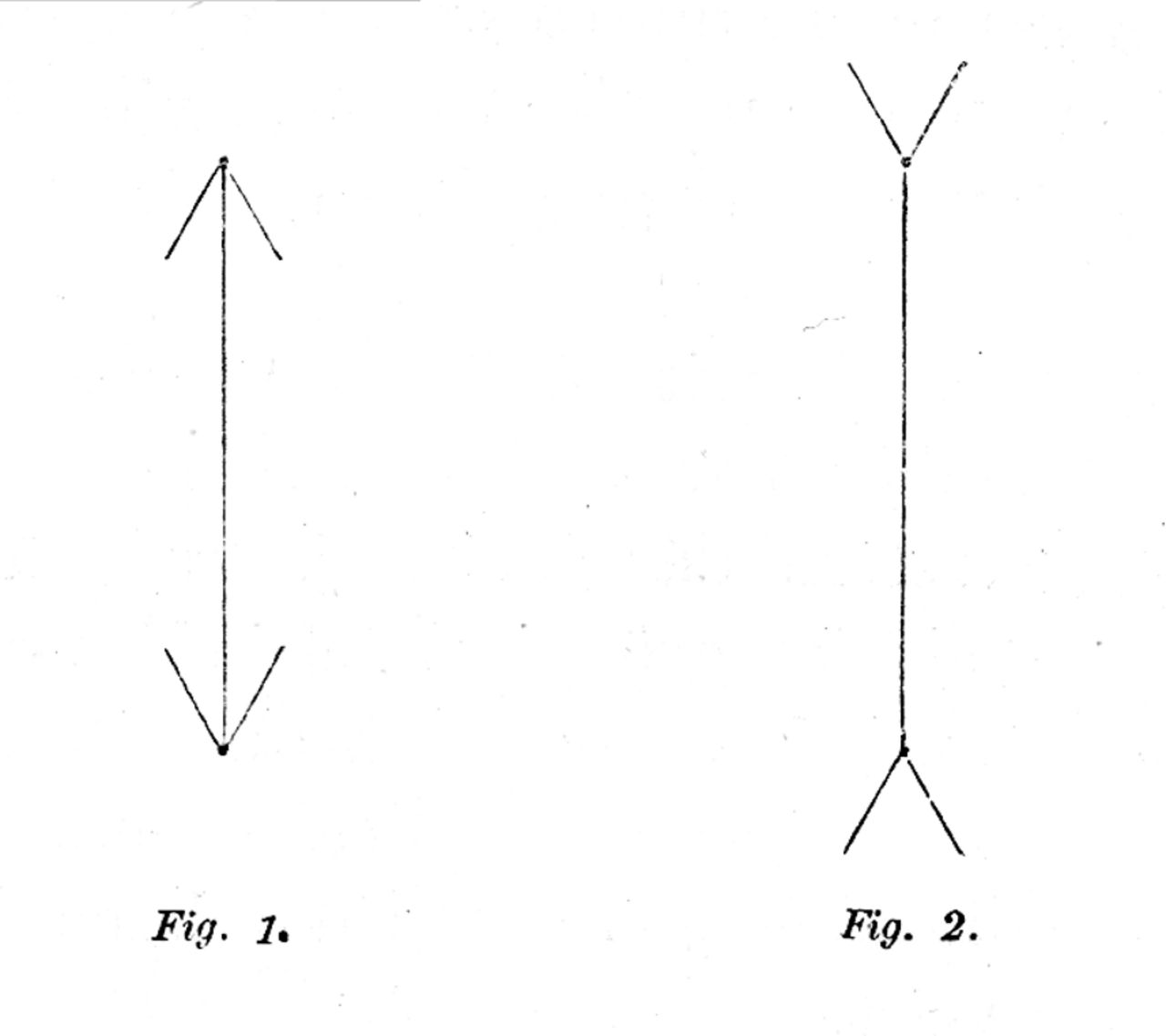
Ordinary perceptual illusions show how a misrepresentation can persist when you know it is false. Try the figure below.
Most people make the lower line noticeably shorter than the upper one before the two look equal. Press "Measure" and the truth is shown. But notice that the lines still look unequal. Knowing the facts does not switch the illusion off, because the illusion is produced by a perceptual mechanism that does not take orders from belief. Frankish thinks the illusion of phenomenality is like this, only deeper. It is produced by the introspective mechanisms that tell us about our own minds, and it would persist even in someone fully convinced of illusionism.
Where he meets Dennett
Almost everywhere. Dennett called Frankish's survey superb and said its account of his own view was flawless. Both think phenomenal consciousness, as philosophers define it, does not exist. Both think the real explanatory target is our conviction that it does, and both treat that conviction as data to be explained, not as evidence of anything beyond the brain. Dennett's 2016 essay is essentially an argument that Frankish's position deserves to be treated as the default.
Where they part
The differences are matters of emphasis and vocabulary. Frankish is happy to talk of the representation of phenomenal properties, and much of his programme asks how introspection represents our sensory states. Dennett, in his reply, flagged "representation" as the weak spot: a representation is only fully specified when you say who or what it is for, and that is the Hard Question again. He also suspected that some of Frankish's neat questions, such as whether sensory states are constantly monitored or merely available to monitoring, would dissolve into continua once the neuroscience is known.
There is a difference of temperament too. Frankish presents illusionism carefully as a hypothesis, to be argued for against realism. Dennett is readier to say that realism was never more than the trick working on its audience.
| Frankish | Dennett | |
|---|---|---|
| What is the mind? | Brain processes, including introspective self-models. | What the brain does: a pattern of functions. |
| Is phenomenal consciousness real? | No. Introspection misrepresents quasi-phenomenal properties as phenomenal. | No, not as philosophers define it. It is an illusion produced by the brain. |
| Could a machine have a mind? | Yes, if it had the right functional organisation. | Yes, in principle, if it does what we do. |
| Is there a hard problem? | No. It is replaced by the illusion problem. | No. There is the Hard Question: and then what happens? |
Further reading
- Keith Frankish (ed.), Illusionism as a Theory of Consciousness (Imprint Academic, 2017): the target article, with replies from Dennett, Humphrey and many others.
- Keith Frankish, "Illusionism as a Theory of Consciousness", Journal of Consciousness Studies 23 (2016).
- Keith Frankish, Mind and Supermind (Cambridge, 2004): his earlier work on belief and the two levels of the mind.
- Consciousness, Stanford Encyclopedia of Philosophy.