British psychologist, born 1943
Nicholas Humphrey
Sensation began as the body's response to a stimulus, a wriggle of acceptance or rejection at the skin. Over evolutionary time the response folded inward until it only targeted itself. The result is a magical show the brain puts on for itself, and it was worth evolving.
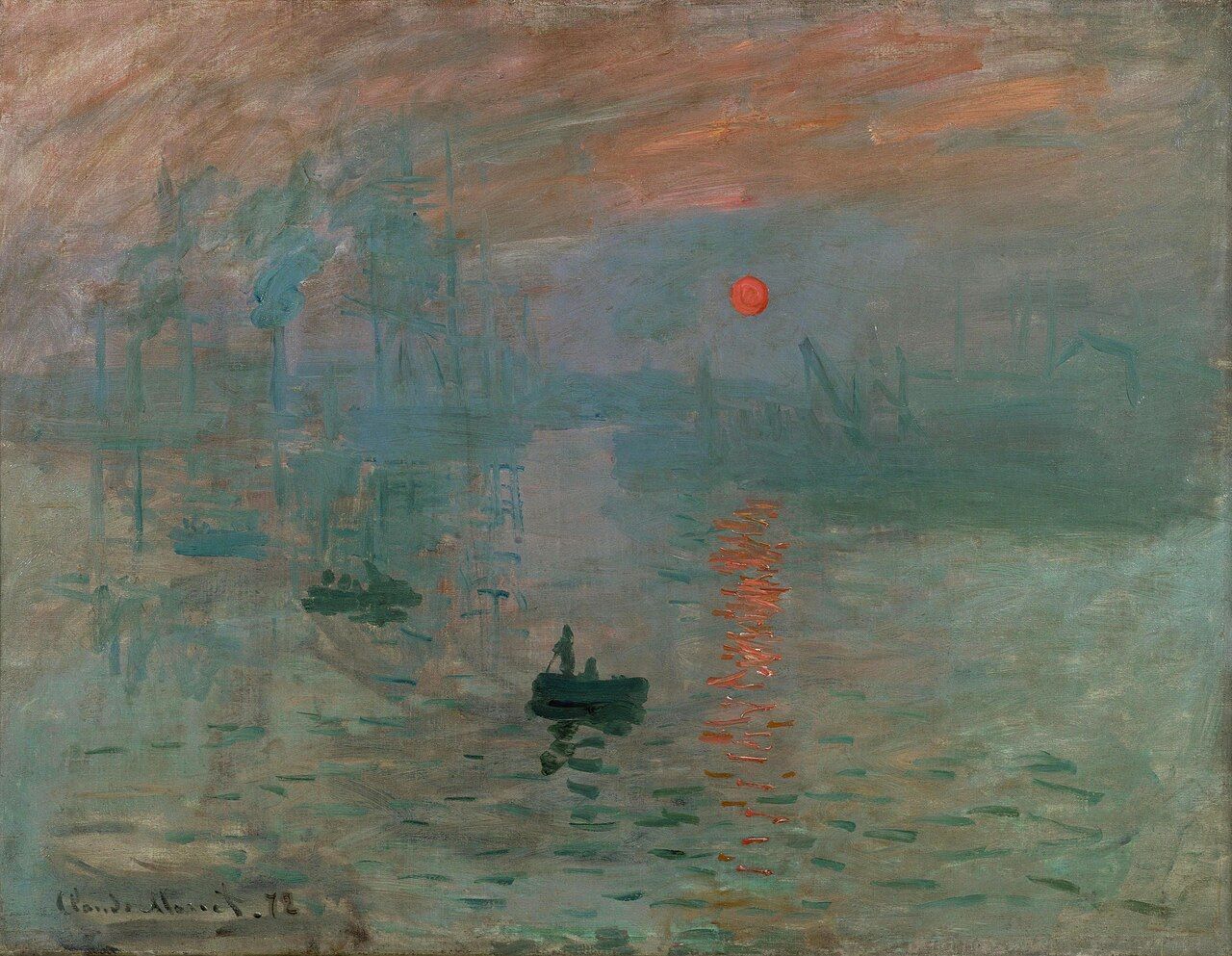
The view
Humphrey came to philosophy from the laboratory. As a graduate student in Cambridge in the late 1960s he studied a monkey called Helen, whose visual cortex had been removed. She seemed blind, yet over years she learned to move around a room, avoid obstacles and pick up small objects. Her case helped launch research on blindsight: patients with damage to the visual cortex who insist they see nothing, yet point to objects in their blind field far better than chance. Humphrey drew a lesson from it. Seeing, in the sense of using visual information, can come apart from sensation, the felt quality of seeing.
His books, from A History of the Mind (1992) through Seeing Red (2006) and Soul Dust (2011) to Sentience (2022), tell an evolutionary story about that quality. Early animals responded to stimuli at the body surface with local wriggles, which he calls "sentition". As animals became more complex, these responses were "privatised": they no longer reached the body surface, but were aimed at the incoming signal itself, forming a loop. The loop, which he calls the ipsundrum (from the Latin for "itself"), has a strange property. It represents itself to itself in a way that seems to have depth, presence and quality.
The argument
Consciousness is a magical mystery show that we stage for ourselves inside our own heads. After Humphrey, Soul Dust (2011)
Humphrey's favourite image is a sculpture by the psychologist Richard Gregory. Seen from one point of view, it is a solid triangle that cannot exist: three beams joined at right angles to one another, forming a closed loop. Walk round it and you see three ordinary beams, not joined at all. Humphrey thinks the ipsundrum is like this. It is a perfectly physical process which, viewed from the inside, presents itself as something impossible: as the extra, ineffable quality that philosophers call phenomenal. Turn the figure below and find the point of view.
Why would evolution build such a thing? Humphrey's answer is that it makes life matter. A creature that finds its own sensations wondrous will value its existence, and an animal that values its existence will fight harder to keep it. Consciousness, he argues, is less a tool for processing information than a way of giving the self something worth living for. In Sentience he argues that this kind of consciousness may be limited to warm-blooded animals, mammals and birds.
Where he meets Dennett
Humphrey and Dennett were friends and collaborators for decades, and agreed on the essentials. Consciousness is something the brain does, and its peculiar features need an explanation in evolutionary and mechanical terms. Both treat the feeling that experience is irreducibly mysterious as itself a product of the brain, and both are functionalists in the broad sense. A machine with the right organisation could, in principle, have what we have.
Where they part
Humphrey resists the word "illusion". In his reply to Frankish's illusionism, he proposed "phenomenal surrealism" instead. The brain really does create sensations with extraordinary properties. It is just that those properties are a kind of artwork, a representation that presents itself as more than physics, rather than a mistake to be corrected. Dennett would say the difference is largely verbal: whether you call it an illusion or a work of art, there is no phenomenal property over and above the physical process. Humphrey would answer that the word matters, because "illusion" suggests something we would be better off without.
They also differ on scope. Dennett was generous about animal minds and wary of sharp lines. Humphrey draws a fairly sharp line around sentience, on the grounds that the ipsundrum is a specific evolved loop that some animals have and others lack.
| Humphrey | Dennett | |
|---|---|---|
| What is the mind? | Brain processes, including a self-sustaining sensory loop. | What the brain does: a pattern of functions. |
| Is phenomenal consciousness real? | Real as a show the brain stages, not as a non-physical extra: "phenomenal surrealism". | No, not as philosophers define it. It is an illusion produced by the brain. |
| Could a machine have a mind? | Yes, if it were built with an ipsundrum. | Yes, in principle, if it does what we do. |
| Is there a hard problem? | A real puzzle, solved by evolution and design, not by new physics. | No. There is the Hard Question: and then what happens? |
Further reading
- Nicholas Humphrey, Sentience: The Invention of Consciousness (Oxford, 2022): the story of Helen and the case for a sharp line around sentience.
- Nicholas Humphrey, Soul Dust: The Magic of Consciousness (Quercus, 2011).
- Nicholas Humphrey, Seeing Red: A Study in Consciousness (Harvard, 2006): a short book of lectures.
- Keith Frankish (ed.), Illusionism as a Theory of Consciousness (Imprint Academic, 2017), for Humphrey's reply to illusionism.