A scientific theory, 1988 to now
Bernard Baars and Stanislas Dehaene
Most of what the brain does, it does in the dark: many specialised processes running at once, none of them conscious. A thought becomes conscious when it wins a competition and is broadcast to all of them at once. That, in one sentence, is the global workspace theory, the most influential scientific account of consciousness.
The view
The psychologist Bernard Baars proposed the theory in A Cognitive Theory of Consciousness (1988). His method was to compare cases where the same information is processed consciously and unconsciously, and ask what the difference is. A word you see and a word flashed too quickly to see can both be read by the brain; a skill you are learning and the same skill once it is automatic can both be carried out. What the conscious cases share, he argued, is that the information is made globally available: posted on a kind of central notice board where every specialised system in the brain, from memory to speech to planning, can use it.
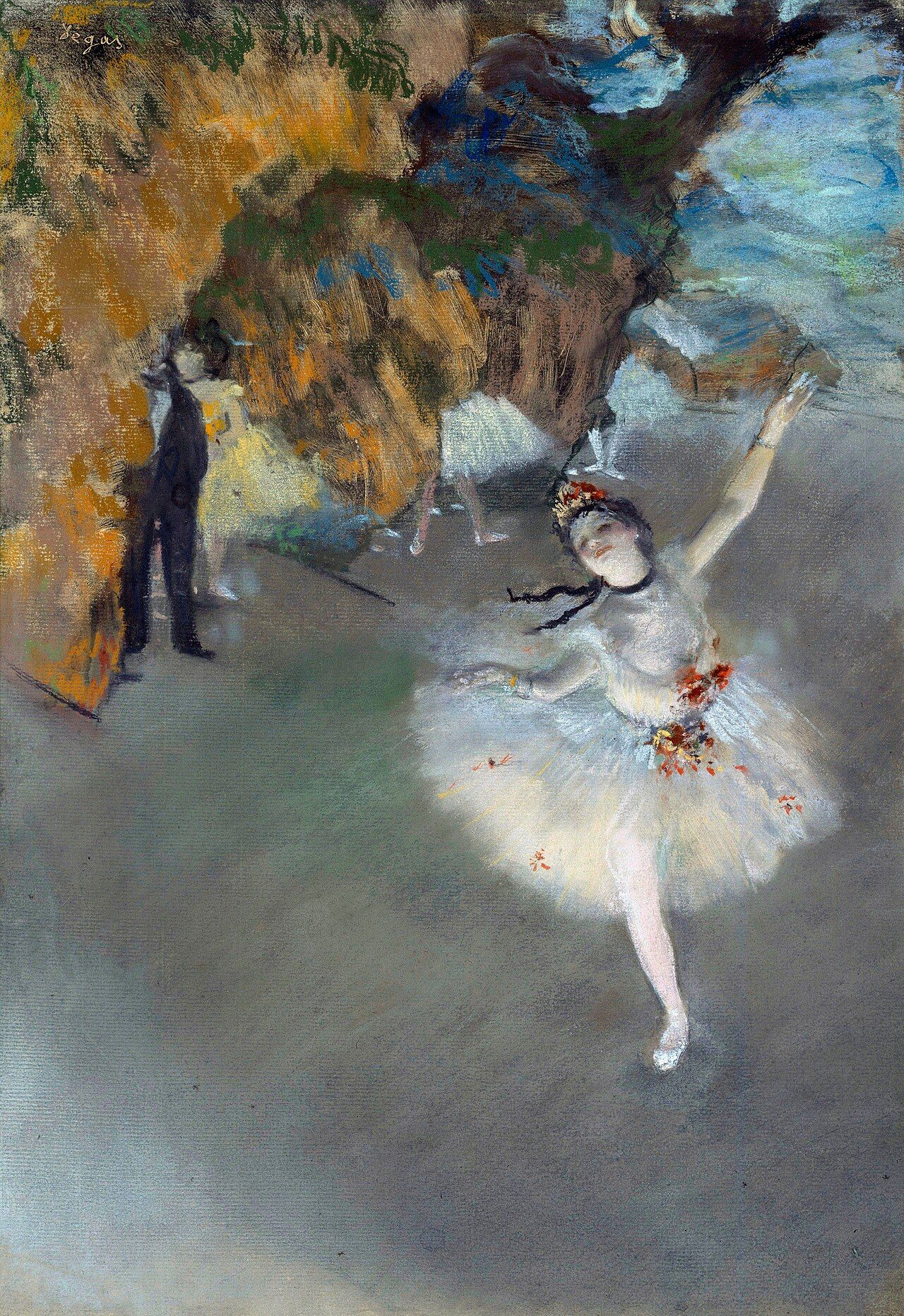
Baars described this with a theatre. The stage is working memory, with room for only a few things at once. Attention is a spotlight that picks out what is on stage. Behind the scenes are directors and stagehands, and in the darkened hall sits a vast audience of unconscious specialists, each waiting for something it can use. Whatever is in the spotlight is broadcast to the whole audience. That broadcast is what it is for something to be conscious.
The neuroscientist Stanislas Dehaene, working in Paris with Jean-Pierre Changeux and Lionel Naccache, turned the idea into a theory of the brain: the global neuronal workspace. On their account the broadcast is carried by long-range neurons, concentrated in the prefrontal and parietal cortex, that link distant regions into a single network. Dehaene's book Consciousness and the Brain (2014) gathers the evidence.
The argument
Consciousness is global information broadcasting within the brain: what we are conscious of is whatever has been made available to every system at once. After Dehaene, Consciousness and the Brain (2014)
The key experiments use masking. A word is flashed on a screen for a fraction of a second and then replaced by a pattern that hides it. If the word is shown briefly enough, people say they saw nothing, yet it still affects them: it speeds up their response to a related word that follows. So the brain read it, unconsciously. Show the word a little longer and people suddenly report seeing it. In between, Dehaene found, there is no gentle slope. Brain recordings show that the early stages of processing grow smoothly with display time, but at about a third of a second after the word appears, the seen trials show a sudden, self-sustaining surge of activity spreading across the cortex, which the unseen trials lack. He calls this ignition, and treats it as a signature of consciousness. Try it below.
The theory makes clear predictions. Conscious contents should be few at a time, should be available for report, memory and reasoning together, and should show ignition. Unconscious processing can be sophisticated, but it stays local and fades within a second or so. A large adversarial collaboration, set up to test this theory against integrated information theory with experiments agreed in advance by both sides, published results in 2025 that were awkward for each: the workspace theory's prediction of a burst of prefrontal activity when a stimulus disappears was not borne out. The debate continues.
Where they meet Dennett
Very closely. Dennett welcomed the global workspace as the place where the science of consciousness was converging on his own view. In 2001 he wrote in the journal Cognition, in a special issue alongside a paper by Dehaene and Naccache, that consciousness is more like fame than television: a content is conscious not because it appears on some inner screen but because it wins enough influence over the rest of the brain. His phrase "fame in the brain" became a standard gloss on the theory. Both views are thoroughly functionalist: consciousness is a matter of what information does, not of some extra property it carries. Both treat a machine with the right architecture as a candidate for consciousness, a question Dehaene addressed directly in 2017 with Hakwan Lau and Sid Kouider. See Could a machine be conscious?
Where they part
Over the theatre and the finish line. Baars embraced the theatre metaphor that Dennett spent decades attacking. Baars's stage is not a place where everything comes together for a single inner viewer, so the difference is smaller than it sounds, but Dennett warned that the picture invites exactly that mistake. Ignition raises a related worry. If there is a precise moment when a content crosses the threshold into consciousness, that sounds like the finish line Dennett's multiple drafts model denies. Dennett's fame comes in degrees and has no exact moment of arrival. There is also a difference of attitude. Workspace theorists usually treat consciousness as something real that the workspace explains. Dennett and the illusionists add that much of what we believe about it, its ineffability and its intrinsic qualities, is the brain's misdescription of its own workings, and the workspace theory on its own says little about why.
| Global workspace | Dennett | |
|---|---|---|
| What is the mind? | Many unconscious specialists, plus a workspace that broadcasts between them. | What the brain does: a pattern of functions. |
| Is phenomenal consciousness real? | Consciousness is real: it is global availability. No extra ingredient is needed. | No, not as philosophers define it. It is an illusion produced by the brain. |
| Could a machine have a mind? | Yes: build a global workspace and it would be a candidate. | Yes, in principle, if it does what we do. |
| Is there a hard problem? | Set aside: explain access and report, and see what is left. | No. There is the Hard Question: and then what happens? |
See every view compared → · Could a machine be conscious? →
Further reading
- Stanislas Dehaene, Consciousness and the Brain (Viking, 2014): ignition, masking and the signatures of consciousness, for a general reader.
- Bernard J. Baars, In the Theater of Consciousness (Oxford University Press, 1997): the theatre, in Baars's own words.
- Bernard J. Baars, A Cognitive Theory of Consciousness (Cambridge University Press, 1988): where it began.
- Daniel C. Dennett, "Are We Explaining Consciousness Yet?", Cognition 79 (2001), and Sweet Dreams (MIT Press, 2005): fame in the brain.
- Stanislas Dehaene, Hakwan Lau and Sid Kouider, "What Is Consciousness, and Could Machines Have It?", Science 358 (2017).