Melbourne, born 1943
Frank Jackson
Mary is a brilliant scientist who has spent her life in a black-and-white room. She knows every physical fact about colour vision. When she finally walks out and sees a red rose, does she learn something new? If she does, the physical facts were not all the facts.
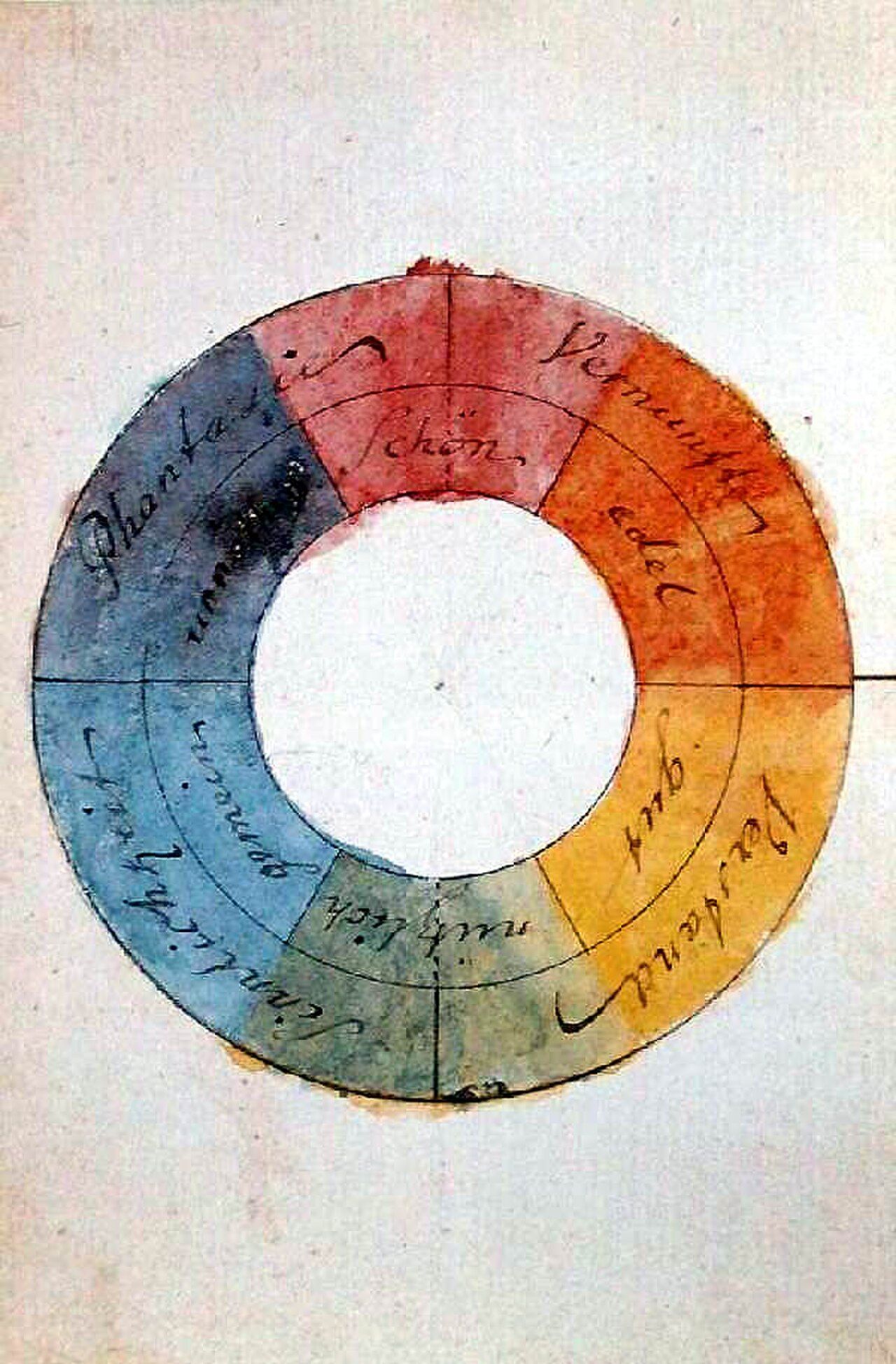
The view
Jackson, who spent most of his career at the Australian National University, introduced Mary in "Epiphenomenal Qualia" (1982) and defended the argument in "What Mary Didn't Know" (1986). At the time he was a self-described "qualia freak": he believed experiences have qualities that physical science cannot capture. The argument he built to show it, the knowledge argument, is among the most discussed in the subject.
Mary has been raised in a black-and-white room, learning about the world through a black-and-white television. She becomes the world's expert on the neurophysiology of vision. She knows what wavelengths ripe tomatoes reflect, how the cones of the eye respond, what happens in the visual cortex, and why people say "red". She knows, let us suppose, every physical fact there is to know about seeing colours.
The argument
It seems just obvious that she will learn something about the world and our visual experience of it. After Jackson, "Epiphenomenal Qualia" (1982)
When Mary is released and sees a ripe tomato, she seems to learn what it is like to see red. If she learns something, there was a fact she did not know. But she knew all the physical facts. So there are facts that are not physical, and physicalism is false. Let Mary out below, then look at the possible replies.
Philosophers have offered three main replies. Jackson's original view was that Mary learns a new fact, a non-physical one. David Lewis and Laurence Nemirow proposed that she gains a new ability instead: to recognise, remember and imagine red. That is knowing how, not knowing that, so no fact was missing. Others say she learns an old fact under a new concept: the physical fact she already knew, now grasped through a new, experience-based way of thinking about it.
Then, remarkably, Jackson changed sides. By the late 1990s he had become a physicalist, arguing that the intuition that Mary learns a new fact, however compelling, must be wrong. Few philosophers have abandoned their most famous argument so publicly.
Where he meets Dennett
The later Jackson and Dennett agree on the conclusion: Mary's story does not refute physicalism. Both treat the intuition that she learns a new fact as something to be explained rather than trusted.
Where they part
Dennett's reply, in Consciousness Explained (1991), was more radical than the standard ones. He asked us to take the story's premise seriously. Mary knows everything physical about colour vision, which is far more than we can imagine. So suppose her captors try to trick her on release by showing her a blue banana. Mary is not fooled. She knows exactly how yellow would affect her visual system, and she can see that this is not it. If she can do that, Dennett argued, it is not obvious that she learns anything at all. The intuition that she must learn something comes from imagining someone who knows a lot about colour, not someone who knows all of it.
Most philosophers, including the later Jackson, find this too quick, and Dennett returned to the case in "What RoboMary Knows" (2007). The banana is a typical Dennett move. Where others take the intuition as a datum, he asks whether the thought experiment has been imagined properly.
| Jackson (1982) | Dennett | |
|---|---|---|
| What is the mind? | Physical processes plus non-physical qualia, which have no effects. | What the brain does: a pattern of functions. |
| Is phenomenal consciousness real? | Yes: Mary learns what it is like to see red. He later recanted. | No, not as philosophers define it. It is an illusion produced by the brain. |
| Could a machine have a mind? | Not addressed; physical duplication would miss the qualia. | Yes, in principle, if it does what we do. |
| Is there a hard problem? | Yes, in 1982: physical knowledge is incomplete. | No. There is the Hard Question: and then what happens? |
Further reading
- Frank Jackson, "Epiphenomenal Qualia", Philosophical Quarterly 32 (1982).
- Peter Ludlow, Yujin Nagasawa and Daniel Stoljar (eds), There's Something About Mary (MIT Press, 2004): the main papers, including Jackson's change of mind and Dennett's reply.
- Daniel C. Dennett, Consciousness Explained (1991), chapter 12, for the blue banana.
- Qualia: the knowledge argument, Stanford Encyclopedia of Philosophy.