Brighton 1900 – Whitby 1976
Gilbert Ryle
The official doctrine says each of us is a ghost driving a machine. Ryle called this a category mistake, like looking for the university among its colleges. A mind is not a hidden thing behind behaviour, but a set of abilities and tendencies shown in it.
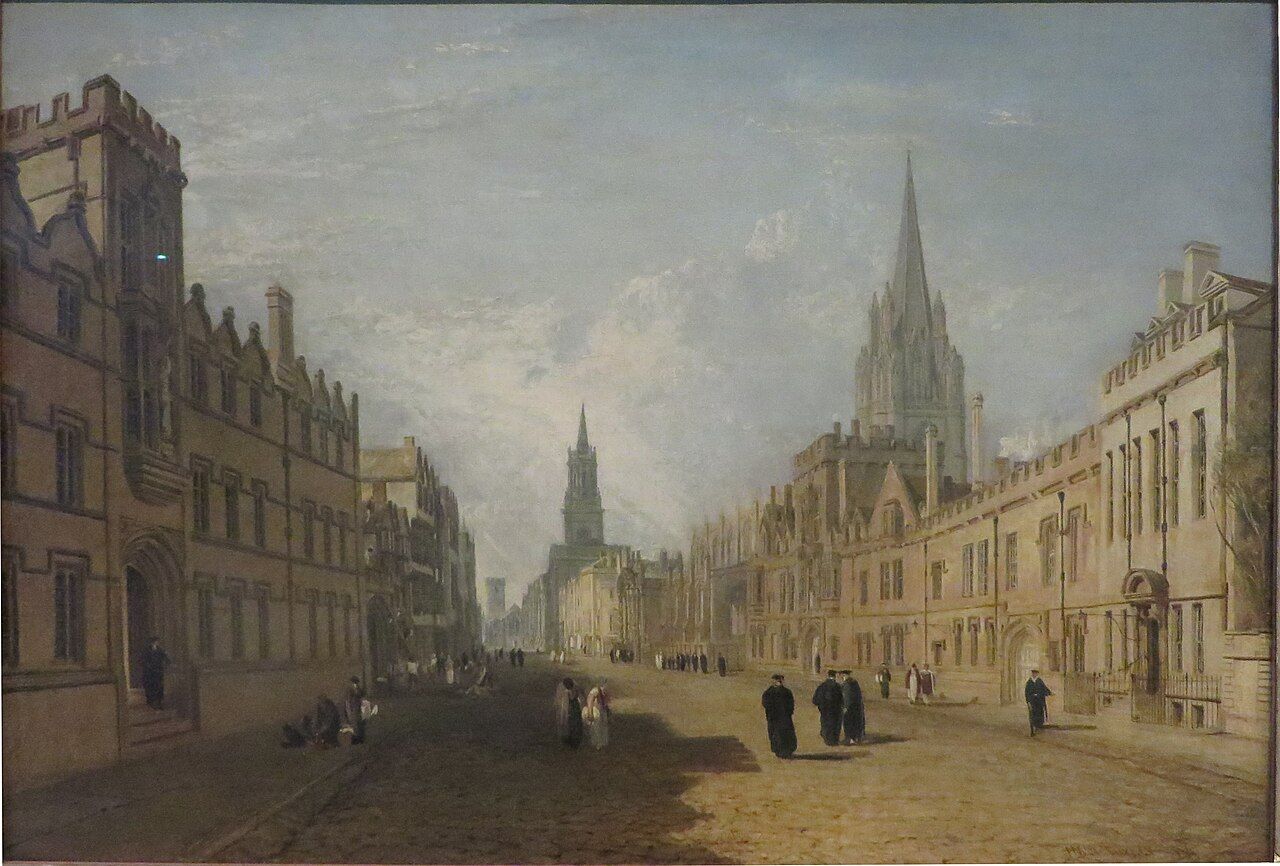
The view
Ryle spent his career in Oxford, where he edited the journal Mind for a quarter of a century and supervised a generation of philosophers. One of them was a young American called Daniel Dennett, who wrote his doctorate under Ryle in the 1960s. Ryle's The Concept of Mind (1949) attacked what he called, with deliberate abusiveness, the dogma of the ghost in the machine: the Cartesian picture of a private inner theatre, known only to its owner, from which a non-physical mind directs a physical body.
Ryle argued that this picture misunderstands our own words. When we call someone intelligent, vain, or in pain, we are not making guesses about hidden inner episodes. We are describing how they act and how they would act in various circumstances. To be vain is to tend to talk about yourself, to fish for compliments, to daydream about your successes. Mental words, on this view, mostly name dispositions and capacities, not ghostly events.
The argument
But where is the University? After Ryle, The Concept of Mind (1949)
Ryle's central idea is the category mistake: treating a thing as belonging to the wrong logical type. His most famous example is a visitor to Oxford who is shown the colleges, libraries, playing fields, museums, laboratories and offices. At the end, the visitor asks where the University is. The visitor has made a mistake. The University is not another building alongside the others; it is the way all of them are organised. Take the visitor's tour below.
The Cartesian, Ryle says, makes the same mistake about the mind. Seeing behaviour, abilities and tendencies, he asks where the mind is, as if it must be one more thing alongside them, only invisible. Ryle also distinguished knowing how from knowing that. Intelligence is mostly a matter of skills, such as knowing how to joke, argue or tie a knot, not of consulting inner rules. An inner rule-consulter would itself need the skill of applying rules, and so on without end.
Where he meets Dennett
At the root. Dennett's refusal to look for the mind as a thing in the head, his attack on the Cartesian Theatre, his use of regress arguments against inner viewers and his view of beliefs as patterns visible in behaviour all descend from Ryle. The intentional stance can be read as Ryle's dispositional analysis, made more systematic. Dennett remained grateful all his life and wrote the foreword to a later edition of The Concept of Mind.
Where they part
Ryle was suspicious of science as a guide to the mind. His method was the analysis of ordinary language, and he thought the problem was largely dissolved once our words were understood. He had little interest in what goes on inside the head. Dennett took the opposite turn. He agreed the ghost had to go, but insisted that something real goes on inside, and that cognitive science must explain it. The question is not only "what do our mental words mean?" but "how does the brain do it?" In this sense Dennett put the machine back into Ryle's picture, without the ghost.
| Ryle | Dennett | |
|---|---|---|
| What is the mind? | A set of abilities and dispositions shown in behaviour. | What the brain does: a pattern of functions. |
| Is phenomenal consciousness real? | The private inner theatre is a myth born of a category mistake. | No, not as philosophers define it. It is an illusion produced by the brain. |
| Could a machine have a mind? | Not a question he pressed; a mind is not a ghost, so nothing rules it out. | Yes, in principle, if it does what we do. |
| Is there a hard problem? | No. It comes from misusing mental words. | No. There is the Hard Question: and then what happens? |
Further reading
- Gilbert Ryle, The Concept of Mind (1949; Penguin Modern Classics, with a foreword by Daniel C. Dennett).
- Daniel C. Dennett, I've Been Thinking (Allen Lane, 2023): his memoir, including his Oxford years.
- Gilbert Ryle, Stanford Encyclopedia of Philosophy.