Ealing 1825 – Eastbourne 1895
Thomas Henry Huxley
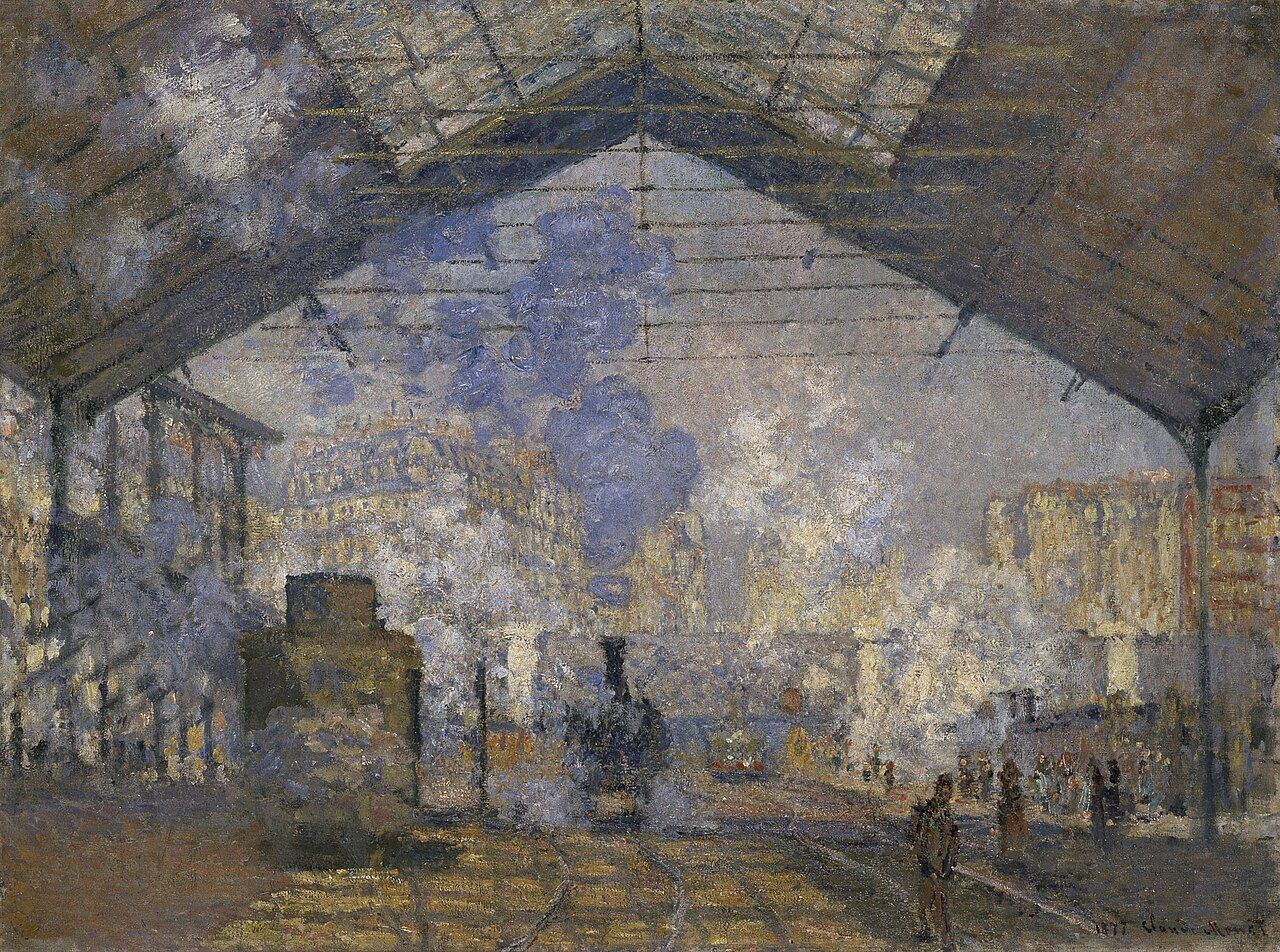
Animals are machines, and so are we. Consciousness rides along with the working of the brain like the whistle on a steam engine: produced by the machinery, but with no power to change how it runs.
The view
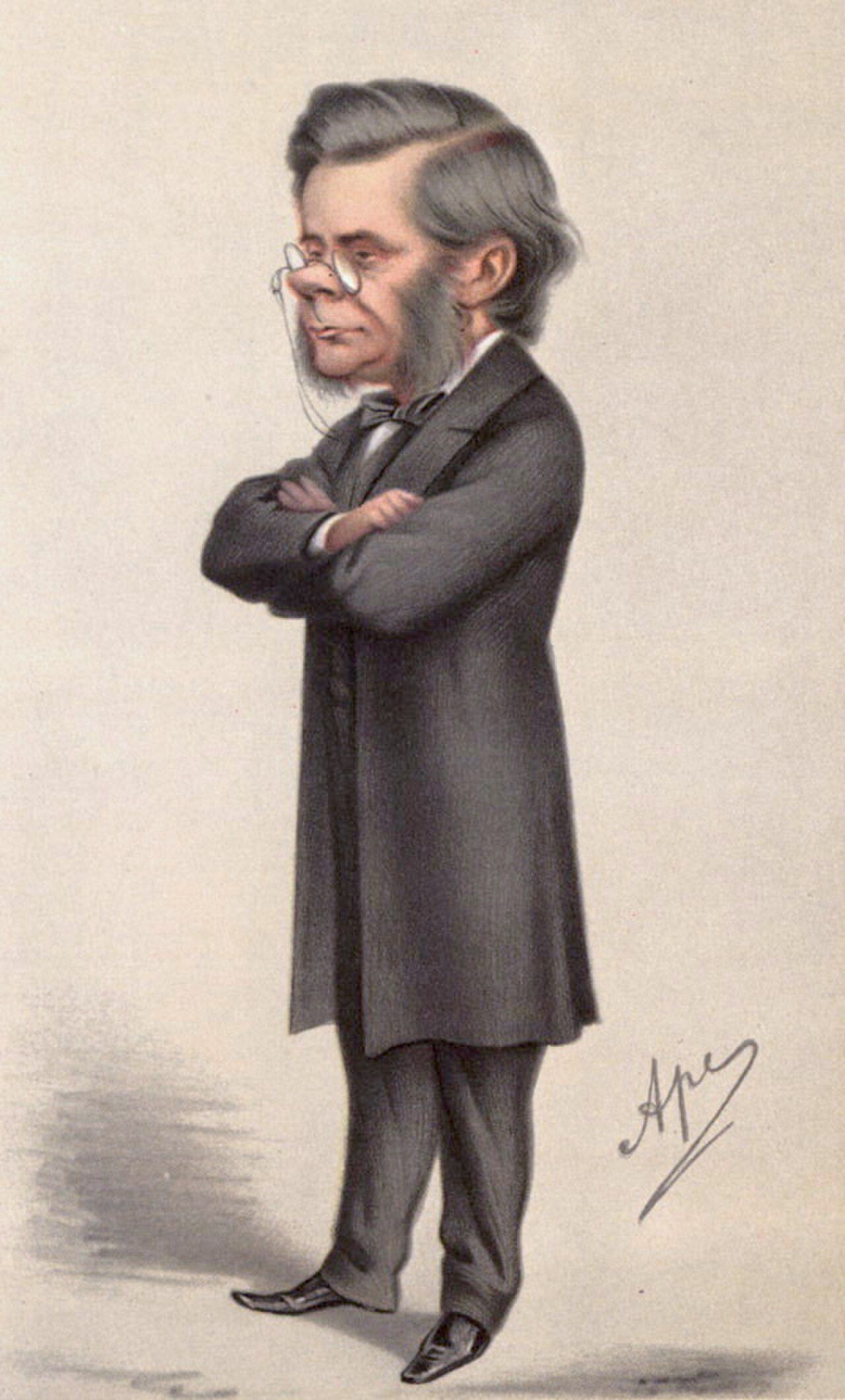
Huxley was the most combative scientist of Victorian Britain: an anatomist, a public lecturer, the defender of Darwin who earned the nickname "Darwin's bulldog", and the man who coined the word "agnostic". In 1874 he addressed the British Association in Belfast on a subject that sounded antiquarian: "On the Hypothesis that Animals are Automata, and its History". He started from Descartes and ended somewhere Descartes would never have gone.
Descartes had said animals were machines without minds. Huxley agreed that animals are machines, but saw no reason to deny that they are conscious. The evidence from physiology was that the nervous system works by physical causes alone. A frog with most of its brain removed can still perform astonishingly complex actions. So consciousness, in frogs and people alike, must be something the machine produces rather than something that drives it.
The argument
Huxley's image is among the most quoted in the history of the subject:
…as completely without any power of modifying that working as the steam-whistle which accompanies the work of a locomotive engine is without influence upon its machinery. Huxley, "On the Hypothesis that Animals are Automata" (1874)
Consciousness is a "collateral product" of the brain's working. Our feeling that we act because we will to act is real as a feeling, but the act was caused by the brain state that also caused the feeling. Philosophers call this view epiphenomenalism. Try the engine below, with and without its whistle.
Huxley also saw the deeper puzzle clearly. In his Lessons in Elementary Physiology (1866) he wrote that how anything so remarkable as a state of consciousness comes about from irritating nervous tissue is as unaccountable as the Djin appearing when Aladdin rubbed his lamp. More than a century before Chalmers, here is the hard problem, stated by a committed materialist.
Where he meets Dennett
Huxley's mechanism is Dennett's starting point. The brain does what it does by physical causes alone, no ghost pulls the levers, and we are, in a perfectly good sense, machines. Huxley's frog experiments are early evidence for one of Dennett's favourite themes: how much complex, apparently intelligent behaviour can be produced without anyone at home to direct it.
Where they part
On the whistle itself. If consciousness had no effects, Dennett asked, how could Huxley write about it? His lecture was caused by his brain. If his consciousness made no difference to his brain, then it made no difference to the lecture either, and his words about consciousness would be exactly the same if he had none. Epiphenomenalism makes our talk about experience float free of experience. Press the third button: an engine whose whistle has no effect cannot report that it has a whistle.
Dennett's conclusion is the reverse of Huxley's. Whatever we are talking about when we talk about consciousness must be something that has effects, above all on our talking. So it must be part of the machinery, not a whistle on top of it. The illusionist adds that the extra, effect-free quality Huxley imagined is exactly what does not exist.
| Huxley | Dennett | |
|---|---|---|
| What is the mind? | Consciousness produced by the brain's machinery. | What the brain does: a pattern of functions. |
| Is phenomenal consciousness real? | Yes, but it has no effects: a collateral product. | No, not as philosophers define it. It is an illusion produced by the brain. |
| Could a machine have a mind? | We and the animals already are conscious machines. | Yes, in principle, if it does what we do. |
| Is there a hard problem? | Yes: as unaccountable as Aladdin's Djin. | No. There is the Hard Question: and then what happens? |
Further reading
- T. H. Huxley, "On the Hypothesis that Animals are Automata, and its History" (1874), in his Collected Essays, vol. 1, freely available online.
- Adrian Desmond, Huxley: From Devil's Disciple to Evolution's High Priest (Penguin, 1998).
- William James, "Are We Automata?", Mind (1879): the first great reply to Huxley.
- Epiphenomenalism, Stanford Encyclopedia of Philosophy.